Chore Time as a Game: Making Helping Fun for Little Kids
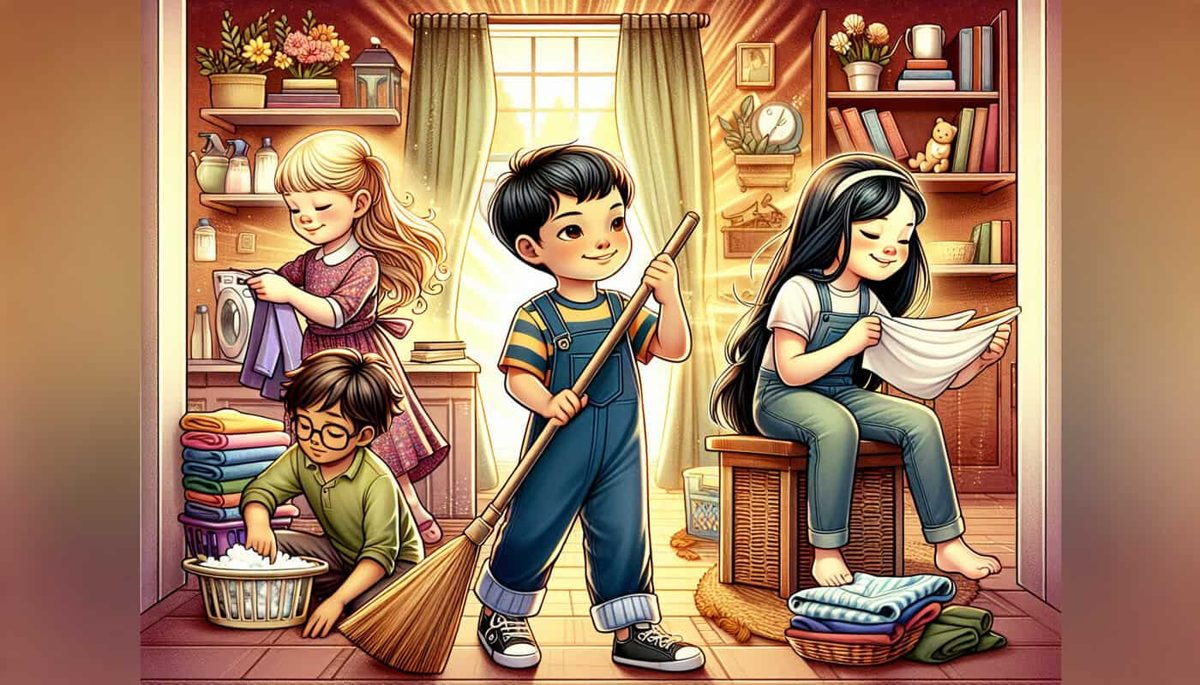
The fastest way to empty a room of children is to say the words 'time to clean up.' The fastest way to fill it again is to say 'beat the timer.' Same room, same toys on the floor, completely different energy. Somewhere around my second child I stopped fighting that reality and started using it: chores in our house are games with jobs hidden inside them, and the kids have never once asked why the living room keeps getting clean. If chore time is a daily standoff at your house, steal these ideas.
This works because young children are wired for play, not duty. A five-year-old cannot be motivated by 'a tidy home is its own reward,' but she can be absolutely consumed by whether the stuffed animals make it into the basket before the song ends. Match the game to the age, keep the stakes silly and low, and the habits you actually care about get built underneath the fun.
Why Games Work Better Than Nagging
A game gives a chore three things it normally lacks: a clear start, a clear finish, and a reason to care right now. 'Clean your room' has none of those, which is why it produces a child sitting in the middle of the mess, overwhelmed and somehow dirtier. 'All the books back on the shelf before this song ends' is a mission with edges. Kids also love competing against a clock or a challenge far more reliably than against a sibling, so most of these games race time, not each other.
One caution from experience: keep the game the servant of the habit, not the other way around. Rotate games so they stay fresh, retire ones that stop working without a fuss, and every so often do the job plainly together so kids learn that helping also happens without a soundtrack. The goal is a family culture where helping is normal; the games are just the on-ramp.
Games by Age: Toddlers and Preschoolers
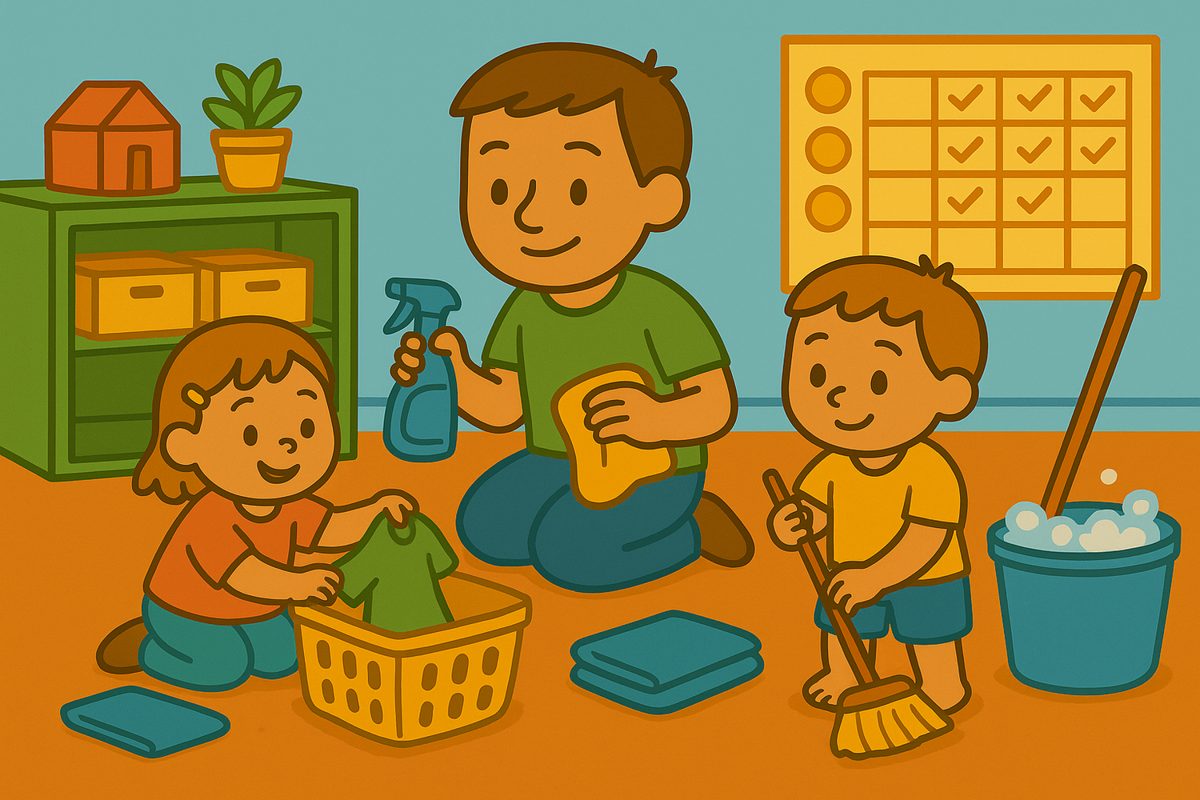
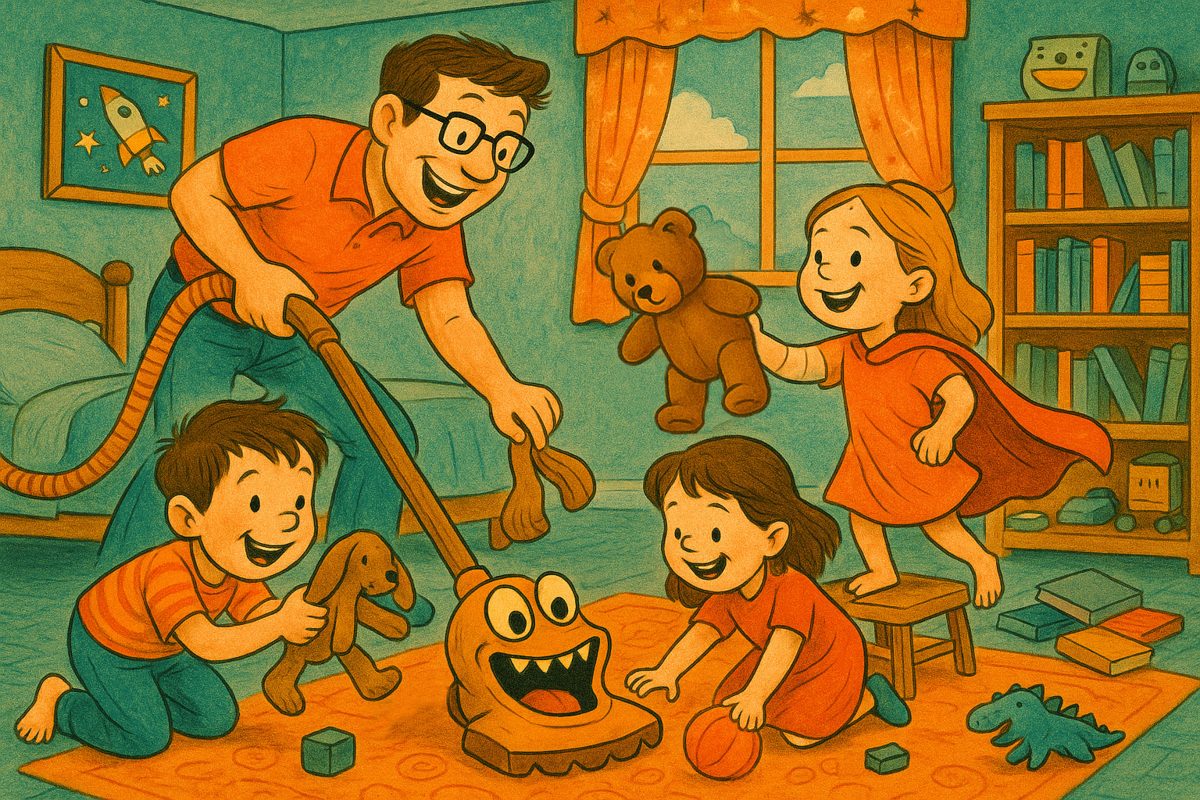
For two to five-year-olds, think short, physical, and wildly dramatic. Two minutes of game is a long session at this age.
- Beat the song: Pick one cleanup song. Everything goes back in the bins before it ends. If the song wins, the toys 'stay up late' and you play again tomorrow
- Color hunt: 'Find everything red and put it away!' Then blue. Toddlers will do this until the room is clean and ask for more colors
- Delivery driver: Hand them one item at a time to 'deliver' to its room. Slow, inefficient, completely beloved
- Tidy treasure: Hide one sticker or a special snack under the last toy to be put away. The final pickup reveals it
- Copycat cleanup: Whatever you pick up, they pick up something like it. Monkey see, monkey tidy
Games by Age: School-Age Kids
Six to twelve-year-olds can handle points, strategy, and a little friendly suspense. This is where chore games get genuinely efficient, because the kids are capable and the games just supply the will.
- Chore bingo: A weekly card of jobs in squares. Finish a row, earn the agreed reward. Blackout cards on school breaks are legendary in our house
- The ten-minute tidy tournament: Timer on, zones assigned, music loud. Inspect at the buzzer with great ceremony and a scorecard
- Mystery job envelopes: Jobs written on slips in a bowl. Draw one, do it, draw again. The unknown is the fun; include one 'free pass' slip and one 'double points' slip
- Level-up list: Basic jobs are Level 1. Finishing them unlocks 'boss jobs' like organizing the game shelf, which older kids weirdly covet
- Photo finish: Take a 'before' photo of the messy room together. The job is to make the 'after' photo as different as possible. Kids love the reveal
A Simple Family Scoreboard
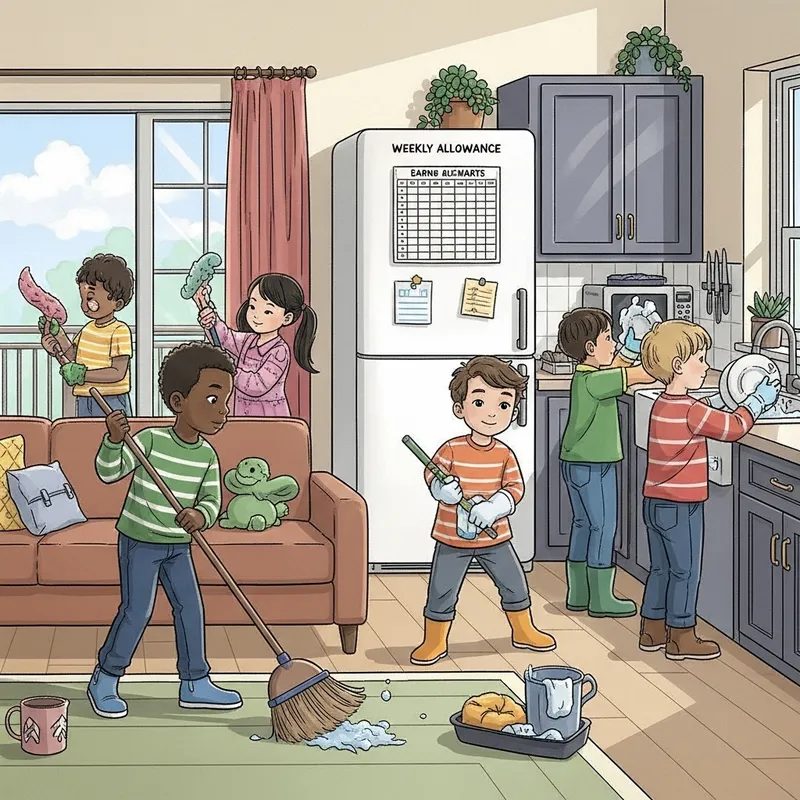
A whiteboard on the fridge is all the technology this needs. Each family member, parents included, gets a column. Jobs earn points based on size, and points reset weekly so nobody is ever hopelessly behind. In our house, points are not money; they are voting power. The week's point leader picks Friday's movie or Saturday's breakfast, which turns out to be a currency children value far beyond its cost.
Put your own name on the scoreboard and do visible jobs for points too. Nothing teaches 'everyone helps here' like watching Mom earn her column, and nothing kills a chore system faster than it being a kids-only obligation.
Review the board together once a week, briefly and warmly. Retire jobs that have become automatic, promote kids to bigger ones with ceremony, and let them propose new games. A system kids help design is a system kids defend.
Praise That Actually Builds the Habit
When the game ends, what you say next is what gets repeated. Skip the generic 'good job' and name the specific thing: 'You got every sock into the hamper without being asked,' or 'The bathroom counter is completely clear; that took care.' Specific praise tells a child exactly which behavior made you light up, and kids, like the rest of us, repeat what gets noticed. Notice effort and improvement more than perfection, especially early on. A wobbly, game-driven, genuinely finished job beats a flawless one you had to nag into existence.
Frequently Asked Questions
Will games make my kids expect entertainment for every chore?
Not if you fade them on purpose. Use games heavily when a habit is new, then let them appear a few times a week, then as an occasional treat. Underneath, keep the steady message that everyone in the family helps because that is what families do. Most kids absorb the routine long before they notice the games got quieter.
What if one child always wins and the other gives up?
Race the clock, not each other, and give each child their own target: a personal best, their own bingo card, their own zone. If you do use points, weight them by age and job size so a four-year-old's honest effort counts. The win should be 'I finished my mission,' available to everyone, every time.
What rewards work without turning chores into a business?
Privileges and choices beat stuff: picking the movie, choosing dinner, staying up fifteen extra minutes, or being the one who plans Saturday morning. Keep rewards small, immediate, and connected to family life. Save money for true extra jobs beyond the everyday baseline, like washing the car or a garage clean-out.