Build a Kids' Reading Nook on a Budget
Our reading nook started as an apology. I had moved my son's books three times in our Rochester apartment, from a basket he ignored to a shelf he could not reach, and he still only wanted the same truck book at bedtime. Then one rainy Saturday I dragged a big floor pillow into the corner by the window, draped a blanket over two chairs, and put six books in a dish tub with their covers facing out. He sat there for forty minutes. Forty. The lesson cost me nothing: kids do not need a Pinterest room to fall in love with reading. They need a small, cozy, inviting spot that is clearly theirs, and books they can actually see and choose.
Pick the Corner Before You Buy Anything
Walk your home like a toddler. The best nook spots are low-traffic corners near natural light but out of the main toy chaos: the end of a hallway, a corner of the living room, the space beside a dresser in a shared bedroom, or even a cleared closet with the door removed or left safely open. Aim for roughly a three-by-three-foot footprint. Bigger is not better for little kids; small and enclosed feels like a hideout, and hideouts get used.
Sit in the spot yourself at your child's reading times of day. Is there glare at noon? A draft in winter? Can you see the space from the kitchen, so a preschooler can read independently while you make supper? Note where the nearest outlet is for a lamp, and whether cords can be kept completely out of reach. Ten minutes of observation now prevents the classic outcome: a cute nook nobody uses because it is dark, cold, or in everyone's way.
Build Comfort for Under Fifty Dollars
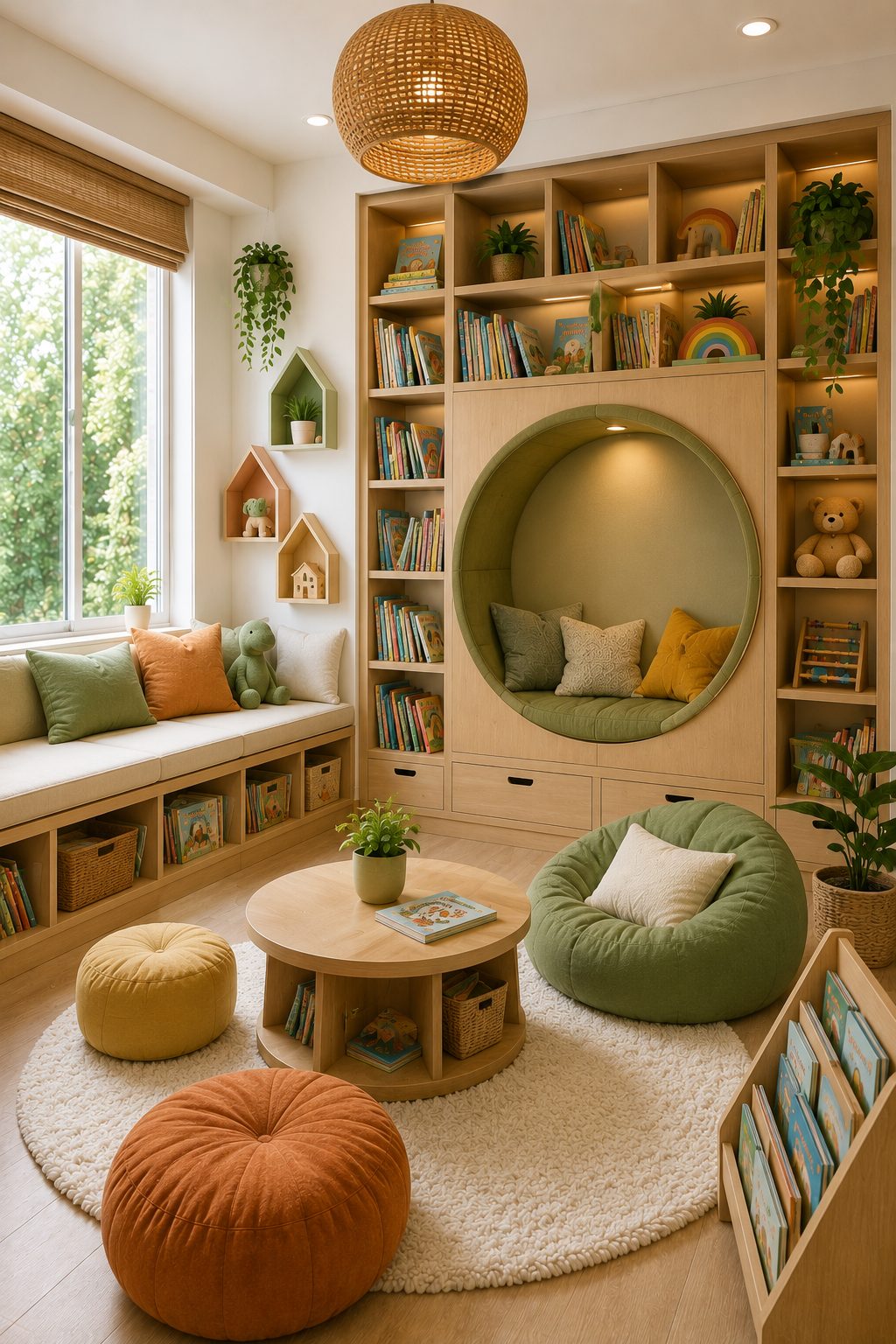
Comfort is the whole product. Start with what you already own: a folded comforter, couch cushions in washable covers, or the mat from a long-retired play gym. If you are buying, buy one good anchor piece and improvise the rest.
- Floor pillow or bean bag, $15 to $30: choose a washable cover, because juice boxes respect no furniture.
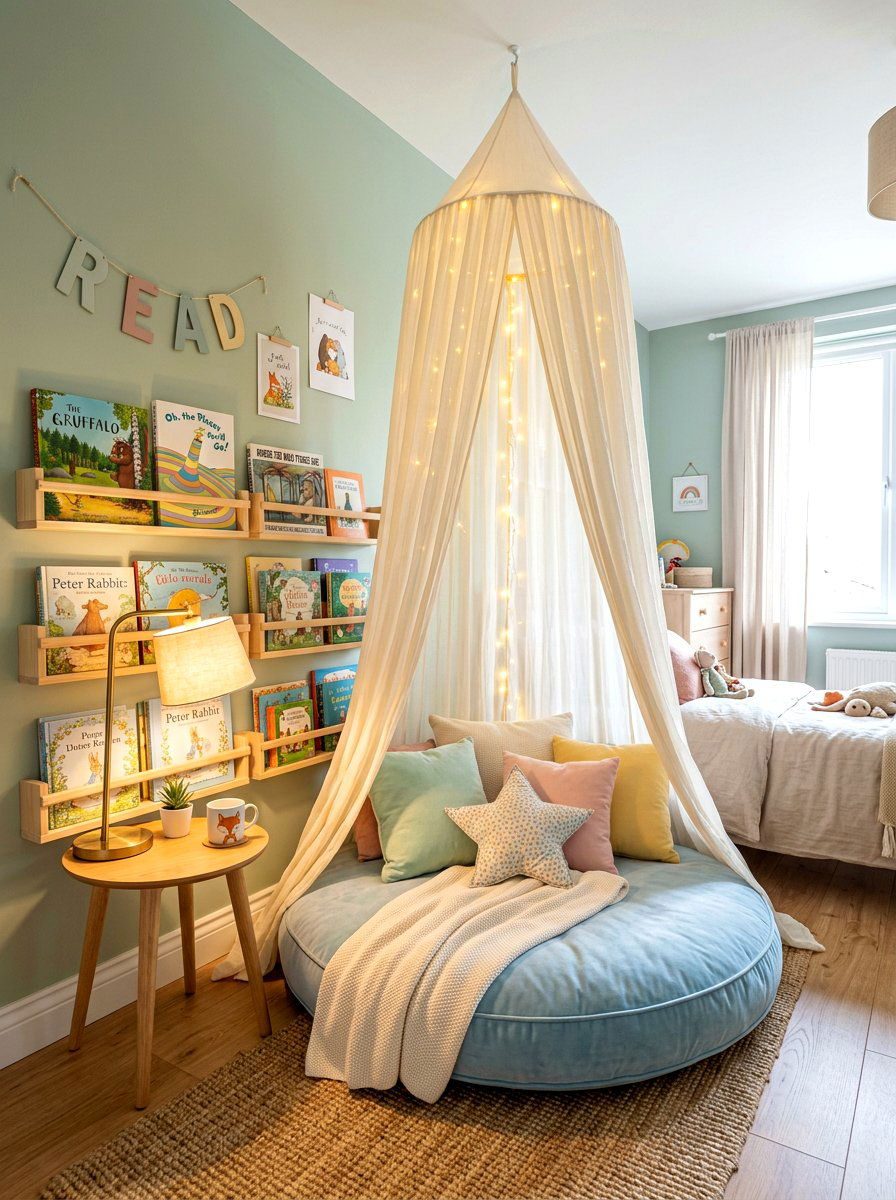
- Pop-up tent or play canopy, $15 to $25: a folding tent adds instant hideout magic and packs away for guests; a shower curtain ring and a flat sheet can do the same job for under $5.
- Soft throw blanket, $0 to $10: raid the linen closet first; thrift stores are the backup plan.
- Stuffed reading buddy, $0: promote an existing stuffed animal to official nook resident instead of buying a new one.
- Small rug or foam mat, $8 to $15: defines the territory and warms up cold Minnesota floors from October through April.
Let your child help choose one thing, even if it is just the blanket color. Ownership is the difference between a corner Mom decorated and a place a child defends as theirs. Add a simple rule that makes the nook special rather than restrictive: it is for books and quiet toys only, no tablets, which keeps it calm and different from every other spot in the house.
Front-Facing Storage Changes Everything
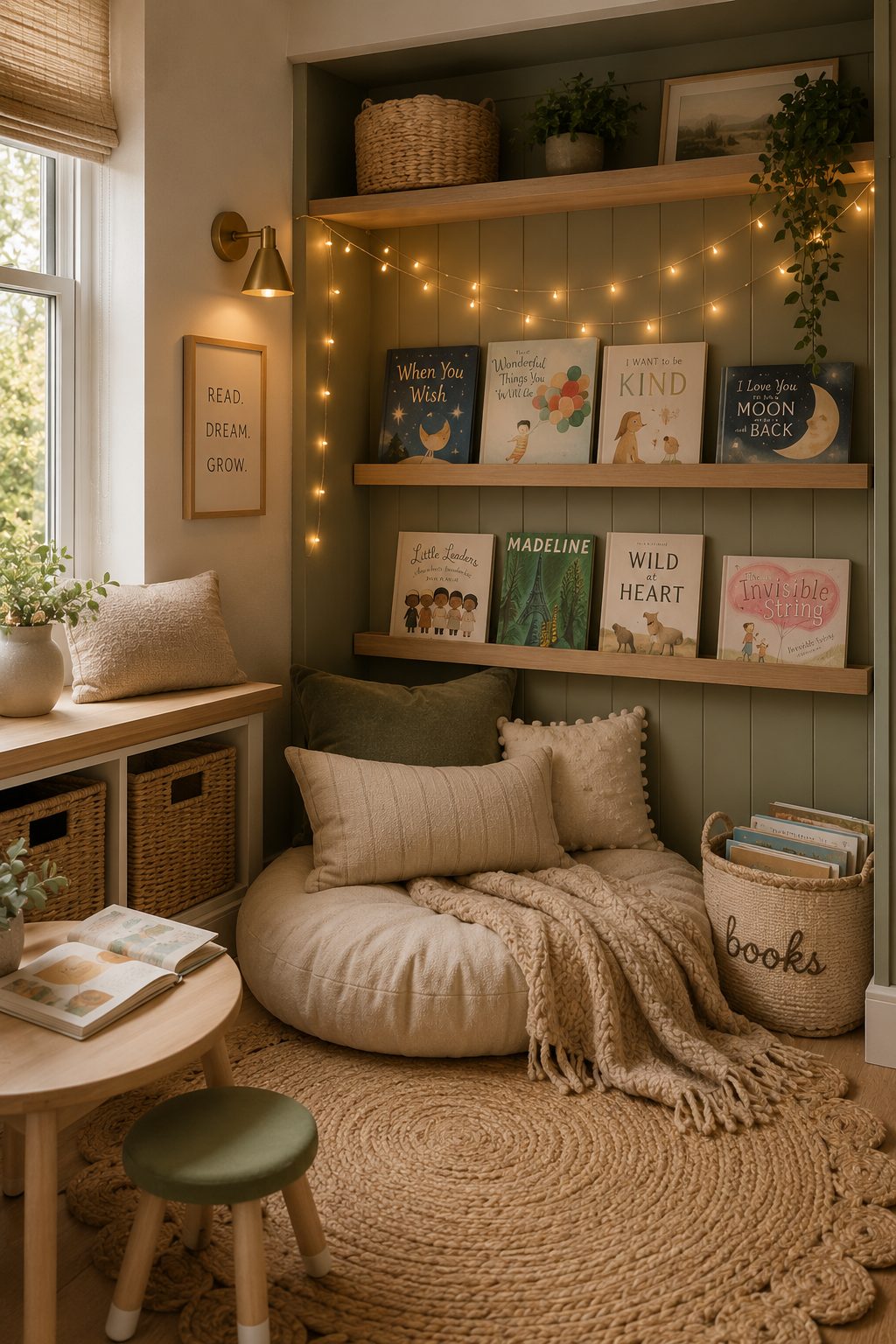
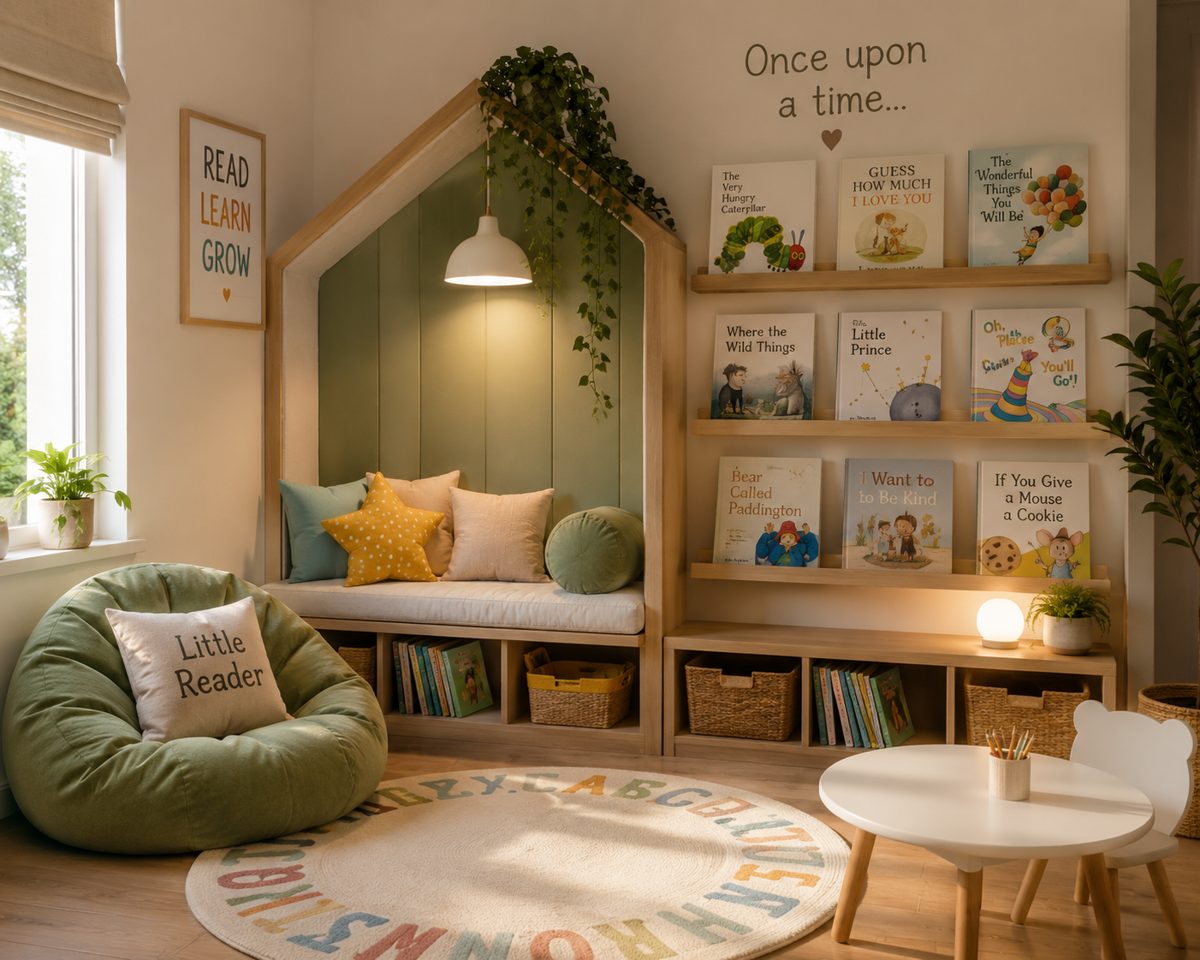
Traditional shelves show toddlers a row of thin spines, which might as well be invisible. Young children choose books by their covers, the same way we all do. Front-facing storage, where covers look out at the child, is the single highest-impact change you can make, and it can be nearly free.
- Dish tub, crate, or low basket, $0 to $6: stand eight to twelve books upright, covers forward, right at floor level.
- Rain gutter or picture ledge shelves, $8 to $15 each: mounted low, they hold covers out beautifully; anchor them firmly into studs.
- Clear over-door shoe organizer, $8 to $12: each pocket displays a paperback cover, perfect for small bedrooms and renters.
- Cardboard magazine files, $1 to $3 each: group books by theme so a dinosaur phase is easy to feed.
Keep only eight to twelve books in the nook at a time. A small, rotating selection feels new every week; a giant pile feels like clutter by Tuesday.
Safe Light for Early Readers and Bedtime Stories
A nook without good light is a fort, not a reading spot. Natural light is ideal during the day. For evenings, choose a sturdy lamp that cannot tip easily, placed outside the nook where little hands cannot pull it down, with cords secured completely out of reach or a cordless rechargeable option instead. Warm white bulbs are easier on eyes and make the space feel cozy rather than clinical. Battery-powered push lights stuck to the wall at adult height can work for ambiance, but check that battery covers screw shut, because button batteries are a serious hazard for young children and loose covers are not worth the risk.
Older preschoolers love a flashlight for tent reading, and that is a safe, cheap thrill as long as it is a kid model without small detachable parts. Skip candles, obviously, and skip string lights with accessible button batteries or hot bulbs inside fabric tents. Cozy should never mean a fire or battery risk hiding in the corner.
Rotate Books for Free With the Library
The budget secret of every great nook is that the books do not have to be yours. A Minnesota library card gives you a rotating collection for zero dollars. Go every two weeks, let your child pick most of the haul, and swap the nook's eight to twelve books when the new stack arrives. Keep two or three beloved owned favorites permanently in place for comfort, and let the library books provide the novelty. Note due dates on the family calendar and keep library books in a separate colored bin if mixing worries you.
Fill the gaps with Little Free Libraries on your walks, garage sale bundles, and swaps with other parents whose kids have aged out of board books. Ask grandparents who want to give gifts for one quality book at birthdays instead of another toy. Within a year, a nook built for under fifty dollars can cycle through hundreds of stories, which is more reading than a five-hundred-dollar room with a static shelf ever delivers.
Frequently Asked Questions
How much does a reading nook really need to cost?
Most families can build a good one for $25 to $50, and many spend nothing by using cushions, blankets, and a crate they already own. Spend first on comfort and front-facing book storage. Decorations can wait, or never happen at all.
How many books should be in the nook at once?
Eight to twelve is the sweet spot for babies through preschoolers. Fewer choices means more actual reading and easier cleanup. Rotate the selection every one to two weeks with library books to keep it feeling fresh.
What if I have no spare corner at all?
Make the nook portable. A pop-up tent or a large basket with a pillow and a book bin can be set up in the same spot each day and put away at night. The ritual of setting it up can become part of the reading routine itself.