Teething Relief That Actually Works: Soothers, Toys, and What to Skip
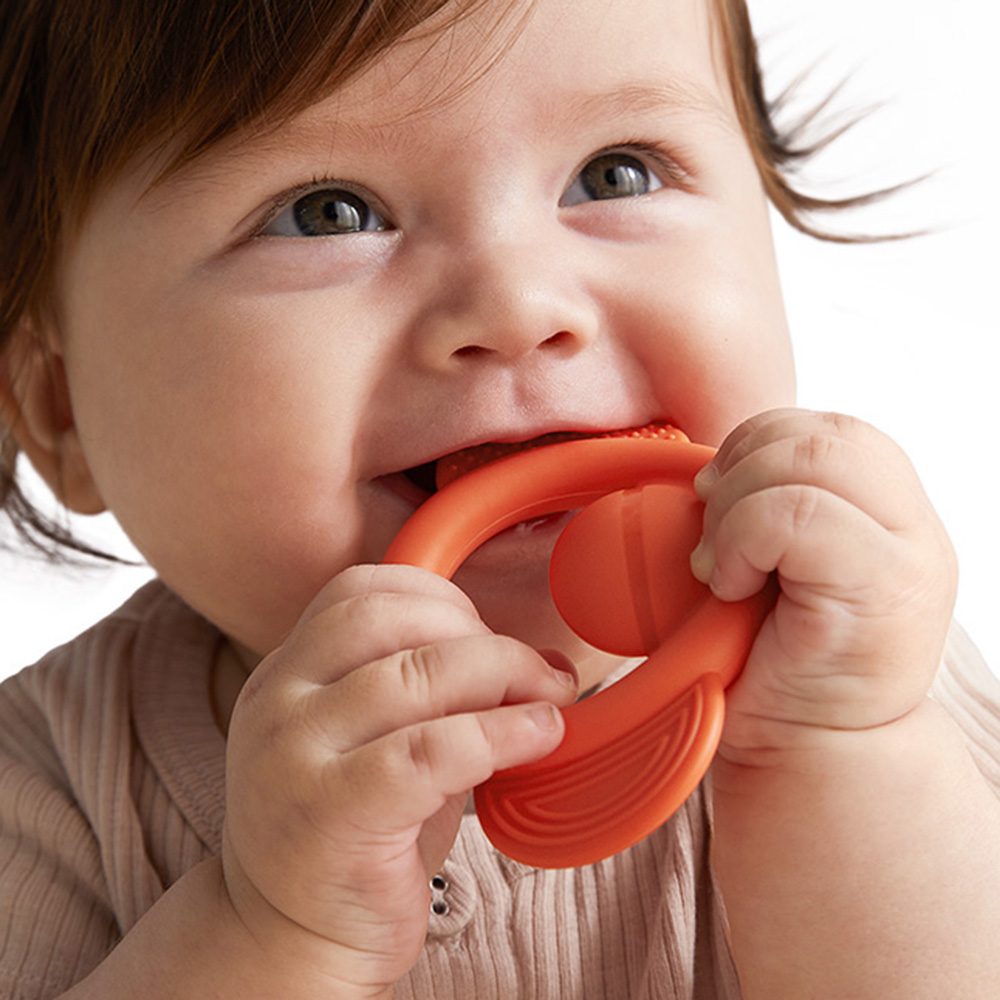
Teething announced itself in our house at about five months, on a February night when the wind was rattling the windows and our son woke up chewing his fist like it had personally offended him. By morning there was drool on everything, one rosy cheek, and a very grumpy baby who wanted to be held and also, somehow, not held. I remember calling my mom in Bemidji and asking whether this could really just be teeth. It was. Two little bottom teeth, weeks of fuss, and a crash course in what actually helps.
This guide gathers the soothers and strategies pediatric guidance supports, plus the popular products worth skipping. It is general information, not medical advice for your child. If your baby has a fever, seems ill, or you are worried for any reason, call your pediatrician rather than assuming teeth are the whole story.
Signs It Is Probably Teething, and Signs It Is Not
Most babies cut their first tooth between four and seven months, usually a lower front tooth, though earlier and later are both normal. Typical teething signs are drooling that soaks bibs, chewing on hands and toys, mildly swollen or tender gums, extra fussiness, and slightly disrupted sleep or appetite for a day or two around an eruption. A very mild temperature rise can happen, but true fever is not considered a teething symptom.
Call your pediatrician instead of blaming teeth if your baby has a temperature of 100.4 degrees Fahrenheit or higher under three months, or any concerning fever after that, diarrhea, a rash beyond drool irritation, ear pulling with fever, poor feeding, or unusual sleepiness. Babies get teeth and viruses in the same busy months, and the two overlap constantly. Trust the part of you that says this seems like more than teeth.
Relief That Actually Helps
The most effective tools are almost boringly simple, which is probably why they work. Pressure and cold are the two sensations sore gums want most.
- A clean finger or knuckle to chew: wash your hands, then let your baby gnaw while you gently rub the sore gum for a minute or two. This is free, instant, and often the fastest calm-down in the house.
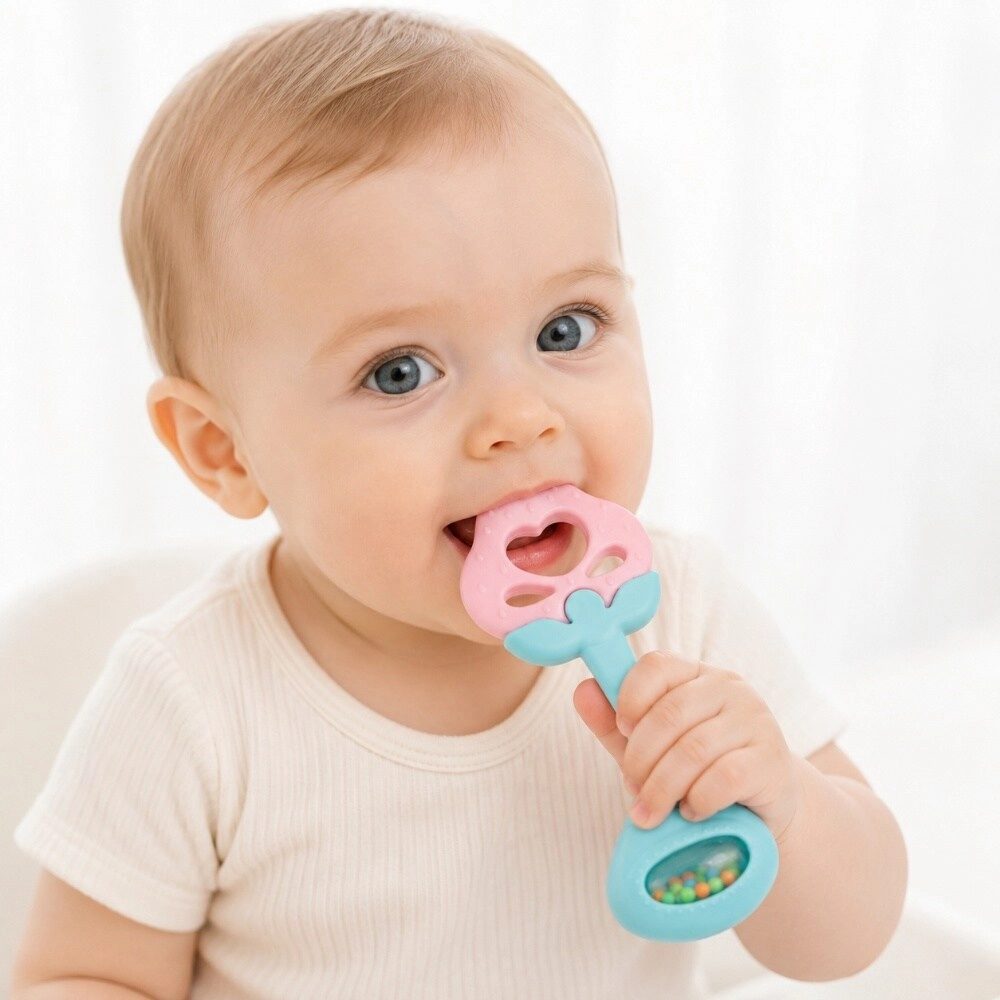
- A chilled teething ring: refrigerate a solid, one-piece teether so it is cool, not frozen solid; rock-hard frozen toys can bruise tender gums. Never tie a teether around your baby's neck.
- A cold, clean washcloth: wet it, twist it, chill it in the fridge, and offer one end to chew. It doubles as a drool mop, which you will need.
- Chilled food for older babies: once solids are established, a cold cucumber spear or chilled fruit in a supervised setting can soothe while they practice eating. Always stay close because of choking risk.
- Extra cuddles and distraction: a walk, a song, a warm bath. Comfort is not a placebo for a baby; it is the treatment working.
If your baby is truly miserable, ask your pediatrician about infant pain reliever. Acetaminophen or, after six months, ibuprofen can help, especially at night, but dosing depends on your baby's weight, so confirm the current dose with your doctor or pharmacist rather than guessing from an old chart.
Choosing Teething Toys Without the Guesswork
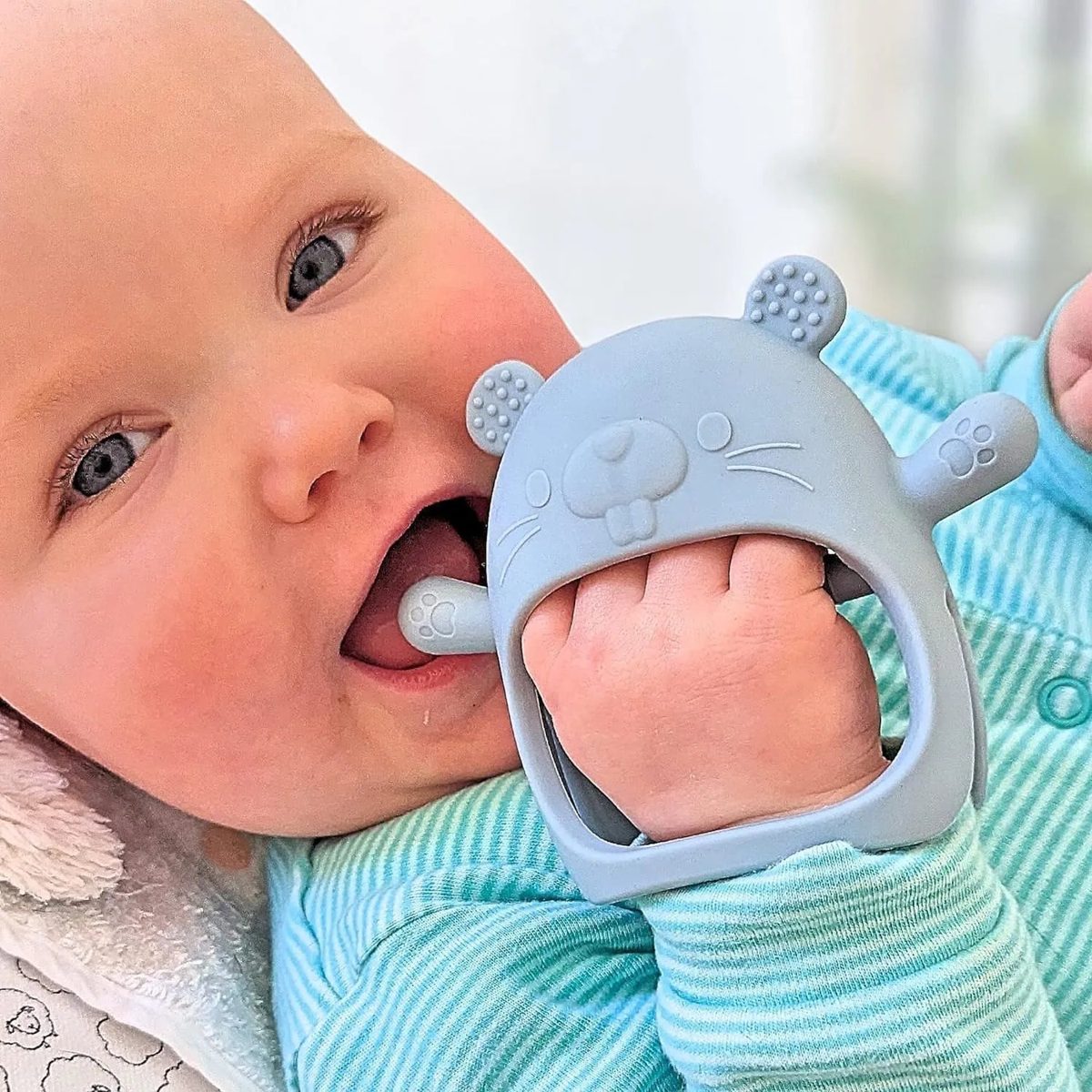
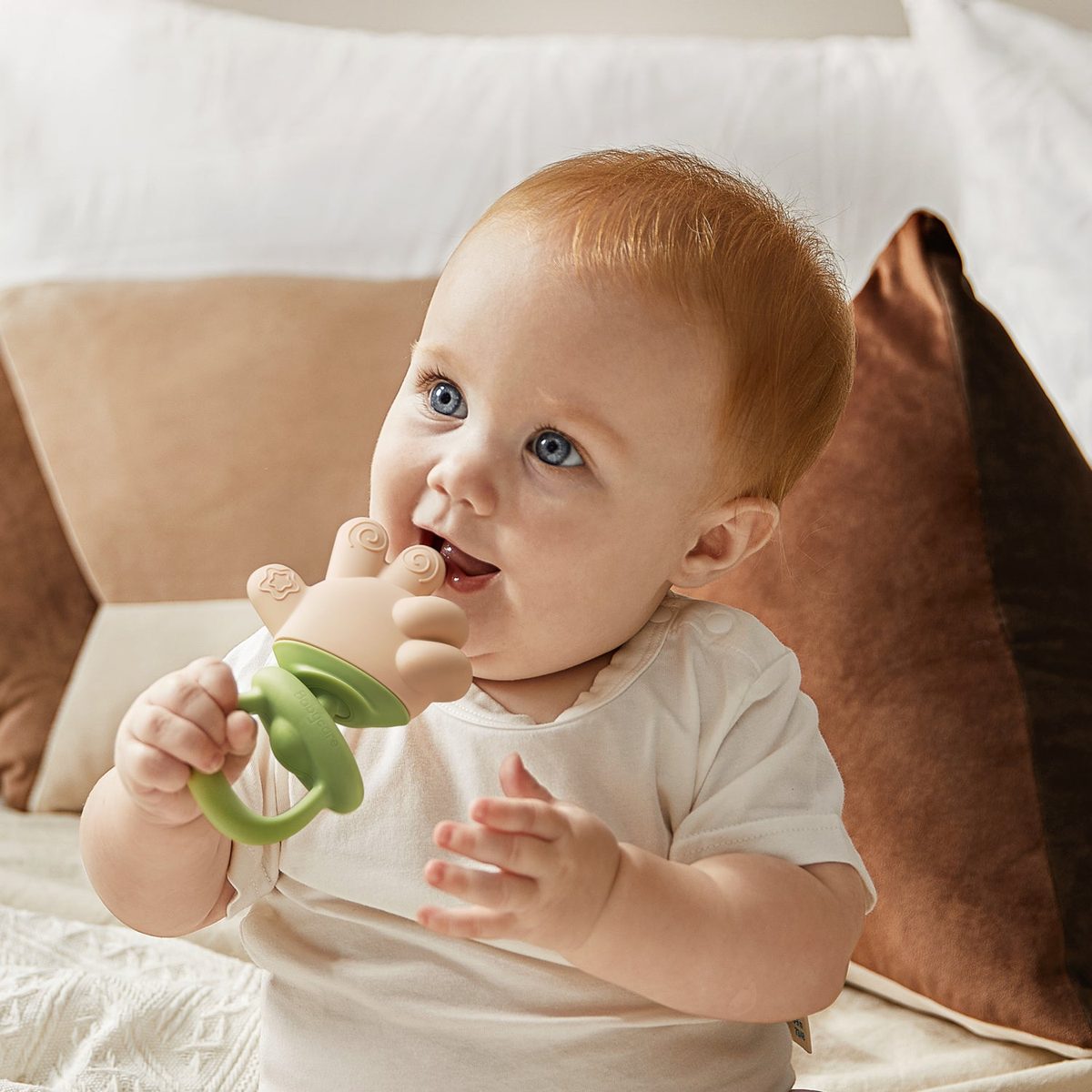
A good teether is one solid piece, big enough that it cannot fit entirely in the mouth, and made of food-grade silicone or natural rubber from a reputable maker. Check for seams that could trap moisture, liquid-filled rings that could leak if punctured, and parts that could break off. Wash teethers regularly with hot, soapy water or on the dishwasher's top rack if the label allows, and inspect them weekly for tears. Keep two or three in rotation so one is always clean and chilled, and skip anything marketed with magnets, batteries, or detachable decorations. Simple rings and textured silicone shapes beat novelty toys every time, and a spare in the diaper bag has saved many Minnesota grocery runs.
What to Skip, and Why It Matters
Some popular remedies are not just useless; they carry real risks that pediatric and safety authorities warn about.
- Amber teething necklaces: skip them entirely. There is no solid evidence the amber relieves pain, and necklaces pose strangulation and choking hazards if beads break. The same goes for any jewelry marketed for babies to chew.
- Benzocaine teething gels: products with benzocaine are discouraged for infants because of a rare but serious blood condition, and gels wash away in minutes anyway. Homeopathic teething tablets have also drawn safety warnings and inconsistent ingredients.
- Frozen-solid teethers and food: fully frozen items are too hard for sore gums, and hard frozen food pieces can break into choking hazards.
- Numbing or alcohol remedies: old folk advice about rubbing alcohol on gums is unsafe and should never be used.
- Any teether on a string, clip, or cord around the neck during sleep or unsupervised time; cords and straps are strangulation risks.
When in doubt, ask one question: is this cold, clean, chewable, and impossible to break apart? If yes, it is probably a fine teether. If it needs a warning label to be safe, skip it.
Frequently Asked Questions
How long does teething pain last for each tooth?
For most babies, the worst fussiness lasts a few days around the time a tooth breaks through, though chewing and drooling can go on for weeks before you see anything. Symptoms that drag on, worsen, or come with fever deserve a call to your pediatrician rather than another week of waiting.
Can teething cause a fever or diarrhea?
Teething may cause a slight rise in temperature, but it is not considered the cause of true fever, significant diarrhea, or illness. Babies this age catch plenty of viruses while teething, so treat real symptoms on their own terms and check in with your doctor.
My baby has no teeth yet at nine months. Should I worry?
Usually not. First teeth arrive anywhere from a few months to past the first birthday, and timing runs in families. Mention it at your regular checkup, and ask your pediatrician if no tooth has appeared by about eighteen months, so they can take a closer look.