Sleep Sacks and Swaddles: A Safe-Sleep Buying Guide
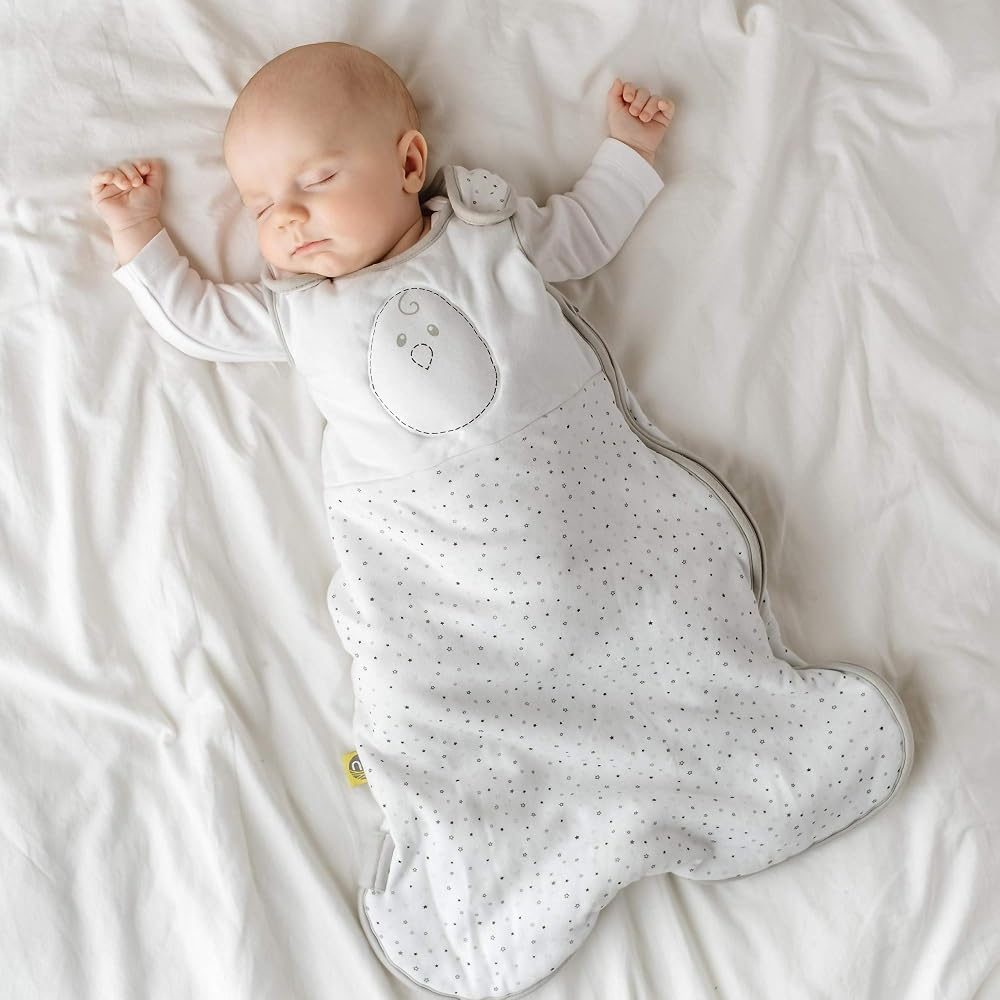
Our first Minnesota winter with a newborn, I layered blankets like I was tucking in a small lasagna. Then our pediatrician in St. Paul gently explained that loose blankets do not belong in a crib at all, and that a sleep sack does the warming job safely. I bought one that night, zipped my daughter in like a tiny sleeping bag with armholes, and slept better myself knowing she could not pull fabric over her face. If you are sorting through swaddles, sleep sacks, TOG ratings, and sizes, here is the calm, practical version.
This guide follows the American Academy of Pediatrics safe sleep guidance: babies sleep on their backs, on a firm, flat surface, with nothing soft or loose in the sleep space, ideally for every nap and night of the first year. A wearable blanket, meaning a sleep sack, is the AAP-friendly way to add warmth. This article is general information, not medical advice, so please ask your pediatrician about your baby's specific needs.
Swaddles: For the First Weeks, With a Firm Stop Date
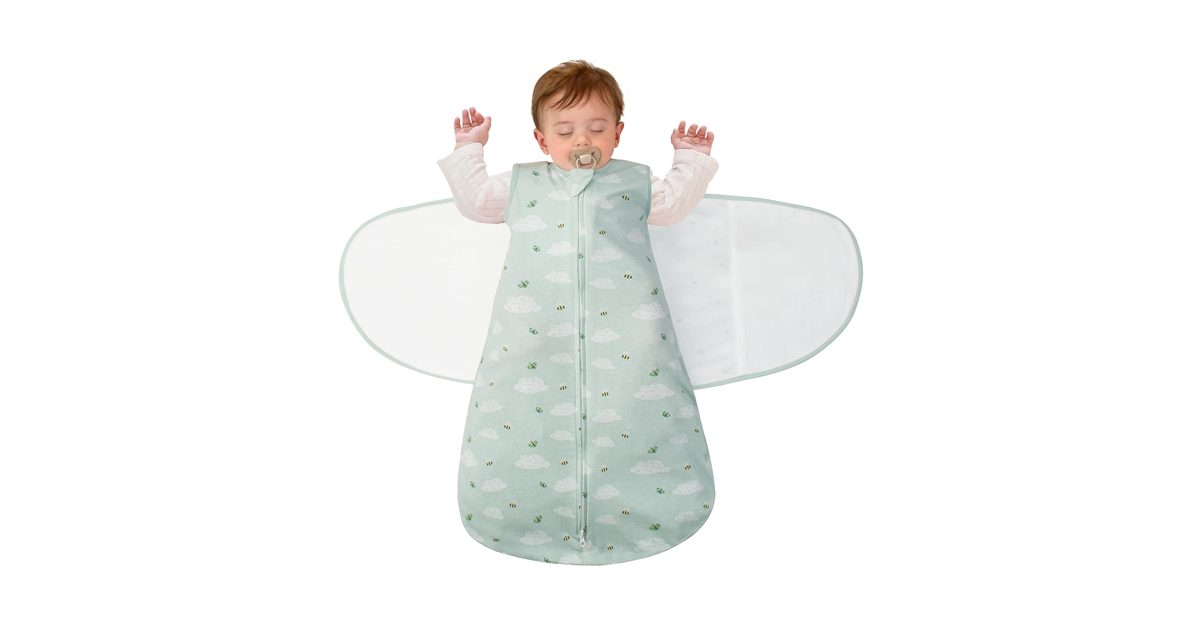
Swaddling wraps a baby snugly with arms in, which calms the startle reflex that wakes newborns every twenty minutes. You can use a large, thin blanket with a secure fold, or a purpose-made swaddle with Velcro or a zipper, which most exhausted parents find far easier at 3 a.m. The wrap should be snug at the chest, allow two or three fingers of room, and stay loose at the hips and legs so they can bend and move; tight swaddling around the legs is not recommended.
The stop date matters more than the brand. Stop swaddling at the very first sign that your baby is trying to roll, which can happen as early as eight weeks, and definitely by three to four months. A swaddled baby who rolls onto the stomach cannot use their arms to lift or turn, which is dangerous. Many families switch to an arms-out sleep sack for a few nights of adjustment, accept some shorter sleep stretches, and find the new normal within a week.
- Snug chest, loose hips and legs, every time.
- Back sleeping only: A swaddled baby always goes down on the back.
- Stop at rolling signs: Rocking side to side, pushing up, or breaking arms out repeatedly.
- No weighted swaddles: The AAP advises against weighted sleep products for babies.
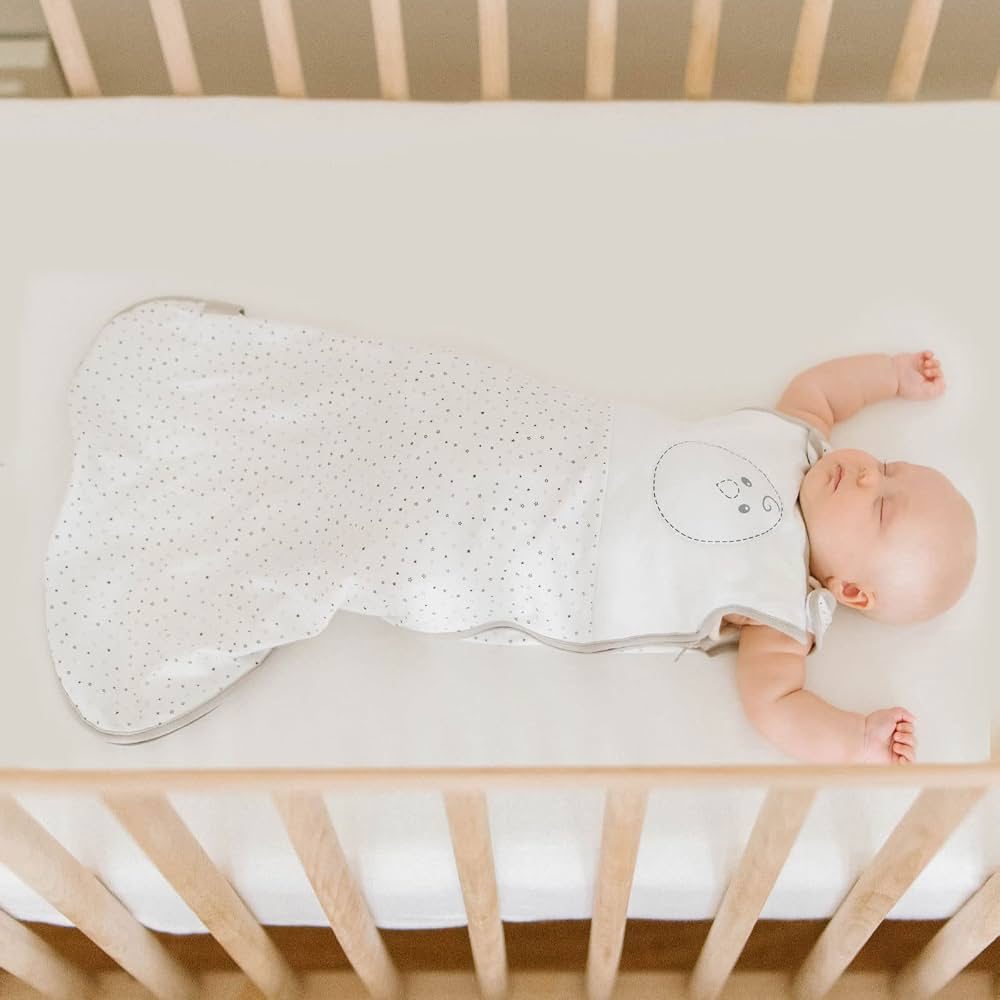
Understanding TOG Ratings and Room Temperature
TOG is a measure of warmth: the higher the number, the warmer the sack. Instead of guessing, check the temperature where your baby sleeps with a simple room thermometer, since nurseries in older Minnesota homes can run five degrees cooler than the thermostat claims, especially near exterior walls in January.
- Room 75 to 81 degrees Fahrenheit: Use a 0.5 TOG sack over a short-sleeve onesie.
- Room 70 to 75 degrees: Use a 1.0 TOG sack over a onesie or light sleeper.
- Room 64 to 70 degrees: Use a 2.5 TOG sack over a long-sleeve sleeper.
- Below 64 degrees: Warm the room if you can rather than piling on layers; a 3.5 TOG sack exists for genuinely cold rooms.
Check warmth by feeling your baby's chest or the back of the neck, not hands and feet, which normally feel cool. A sweaty neck, flushed cheeks, or rapid breathing can signal overheating, which is itself a risk factor to avoid. When in doubt, choose the lighter TOG; you can add a layer under the sack, but never add a loose blanket over it in the crib.
Sizing by Weight, Not Just Age
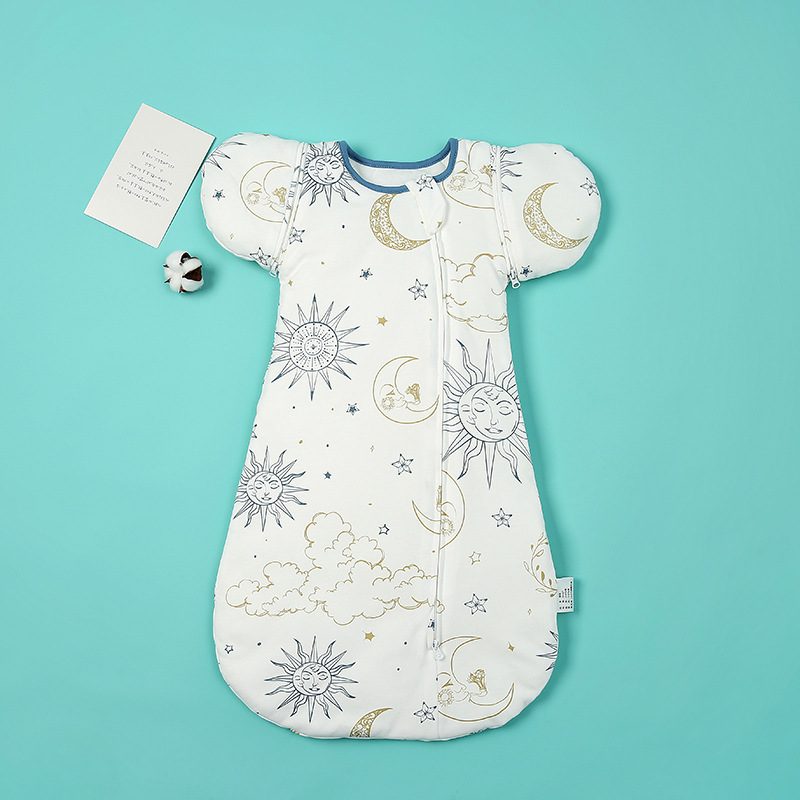
Sleep sacks are sized by weight and length, and those numbers matter more than the age on the tag. A sack that is too big lets a small baby slide down so fabric bunches near the face, while one that is too small restricts the hips and gets outgrown mid-winter. As a rough guide, small sizes often fit about 7 to 18 pounds, medium 16 to 28 pounds, and large 28 to 36 pounds, but always check the chart for the brand you buy, since they vary.
The neck opening should not be large enough for your baby's head to slip inside, and armholes should be snug enough that little arms cannot retreat into the sack. Buy two sacks in the current size, because one will inevitably be in the laundry after a midnight diaper leak. Cotton suits most rooms; fleece adds warmth but can overheat in a well-heated house, and merino regulates temperature beautifully at a higher price.
Think of the sleep sack as pajamas and blanket in one. If you would sleep in a light sheet, your baby wants a light sack; if you reach for a quilt, size up the TOG, not the layers.
The Transition Out of the Swaddle
When rolling signs appear, move to arms-out sleep in stages if it helps. Some families use a transition swaddle with one arm out for a few nights, then both arms out, then a regular sleep sack. Others go straight to the sack and power through two or three rough nights. Either approach is fine as long as the end point is the same: arms free, on the back, in a bare crib.
Keep the rest of the routine identical during the transition: same bedtime, same white noise, same dark room. Babies protest change less when only one thing changes. Once your baby rolls both ways confidently, you can leave them in the position they choose after starting on the back, and the sleep sack can stay in use well into toddlerhood, where it has the bonus of slowing down crib climbing.
Frequently Asked Questions
Can my baby sleep in a sleep sack for every nap and night?
Yes, that is exactly what sleep sacks are designed for, and consistency helps babies settle. Use the right TOG for the room, keep the crib bare, and always place your baby on their back to start sleep. Check the fit as your baby grows and move up a size before the sack gets snug around the hips.
Are weighted sleep sacks safe?
The AAP advises against weighted sleep sacks and weighted swaddles for infants, and safety regulators have echoed that caution. Choose a regular, unweighted sack in the correct TOG instead. If a product promises to make babies sleep longer through added weight, that is a claim to skip, not a feature to pay extra for.
When should I stop using a sleep sack altogether?
There is no required stop age. Many toddlers wear sleep sacks until age two or beyond, and some families switch to a light blanket after the first birthday in a toddler bed. Follow your child's comfort and your pediatrician's guidance, and retire any sack that is torn, too small, or has a broken zipper.