Nursing Bras and Pillows That Actually Help: A Comfort Buying Guide

Somewhere around week thirty-six of my first pregnancy, I stood in a dressing room in Rochester trying on a nursing bra that fit like a medieval device. The band dug in, the cups were somehow both too big and too small, and I left with nothing but a coupon for frozen yogurt. Two weeks after my daughter was born, a kind nurse adjusted one strap, handed me a pillow, and suddenly feeding felt completely different. Comfort is not a luxury when you nurse eight to twelve times a day; it is the whole ballgame.
The good news is that you do not need a drawer full of gear. You need a few bras that fit the body you have right now, not the one you had before pregnancy or expect later, and a pillow that brings the baby up to you instead of forcing you to hunch down to the baby. Here is how Minnesota moms I know actually shop for both, without overspending or suffering through months of sore shoulders.
When to Buy: Late Pregnancy and the First Weeks
Timing is the trickiest part because your size will change. Many moms buy one or two soft, stretchy nursing or sleep bras in the last trimester, sized up from their current band and cup, to get through the hospital stay and the first two weeks at home. These forgiving styles handle the days when your milk comes in and your size swings from morning to evening.
Wait until about two to three weeks after birth, once feeding and your size have settled a bit, to invest in more structured everyday bras. That is when a proper fitting gives you a size that will last for months. If you plan to pump at work later, you can add a hands-free pumping bra then, when you know your routine. Buying everything at thirty weeks is how drawers fill up with expensive bras that never quite fit.
- Third trimester: Buy one or two stretchy sleep bras and a pack of nursing pads.
- Hospital bag: Pack one soft bra, not your best one, since those first days are messy.
- Weeks two to three: Get fitted for two or three everyday nursing bras.
- Back to work: Add a pumping bra if your routine calls for one.

How a Nursing Bra Should Actually Fit
Start with the band, because it does most of the support work. It should sit level and snug on the loosest hook when new, so you can tighten it as the fabric relaxes. You should be able to slide two fingers underneath comfortably. Cups should contain your breast tissue without spilling at the top or gaping, and the center should sit reasonably close to your chest.
Try the bra while sitting and leaning, and practice opening the nursing clasp one-handed, because your other hand will be holding a hungry, wiggly baby. Skip underwire in the early weeks if it presses on breast tissue; many moms find a well-made wireless bra more comfortable while supply is regulating. If you notice a tender, blocked-feeling spot that does not resolve, or redness and fever, contact your doctor promptly. This guide is shopping advice, not medical advice, so please ask your pediatrician or your own clinician about any pain or concerns.
- Band: Snug, level, and fastened on the loosest hook when new.
- Cups: No spilling, no gaping, and no digging at the edges.
- Straps: Wide enough to stay put without leaving deep marks.
- Clasp: Opens and closes easily with one hand, every time.
- Fabric: Breathable and washable, because leaks are a daily event at first.
A good test: wear the bra around the store for five full minutes, sit down, stand up, and lift your arms. If you are already adjusting it, imagine hour six of a growth-spurt day.

How Many Bras Do You Realistically Need?
For most moms, three everyday nursing bras is the sweet spot: one on, one in the wash, and one clean and ready. Add one or two soft sleep bras if you wear support overnight with nursing pads, which many of us do during the leaky first months. That gives you a total of four or five, a load of laundry every two or three days, and no 2 a.m. panic over a soaked bra.
Minnesota winters add one wrinkle: bras washed at night may not dry by morning in a cool house, so an extra bra is cheaper than frustration. Buy two in your confirmed size first, wear them for a week, and only then buy more of the winner. Keep receipts, wash in a lingerie bag, and skip the dryer to protect the elastic.
Choosing a Nursing Pillow and Using It Well
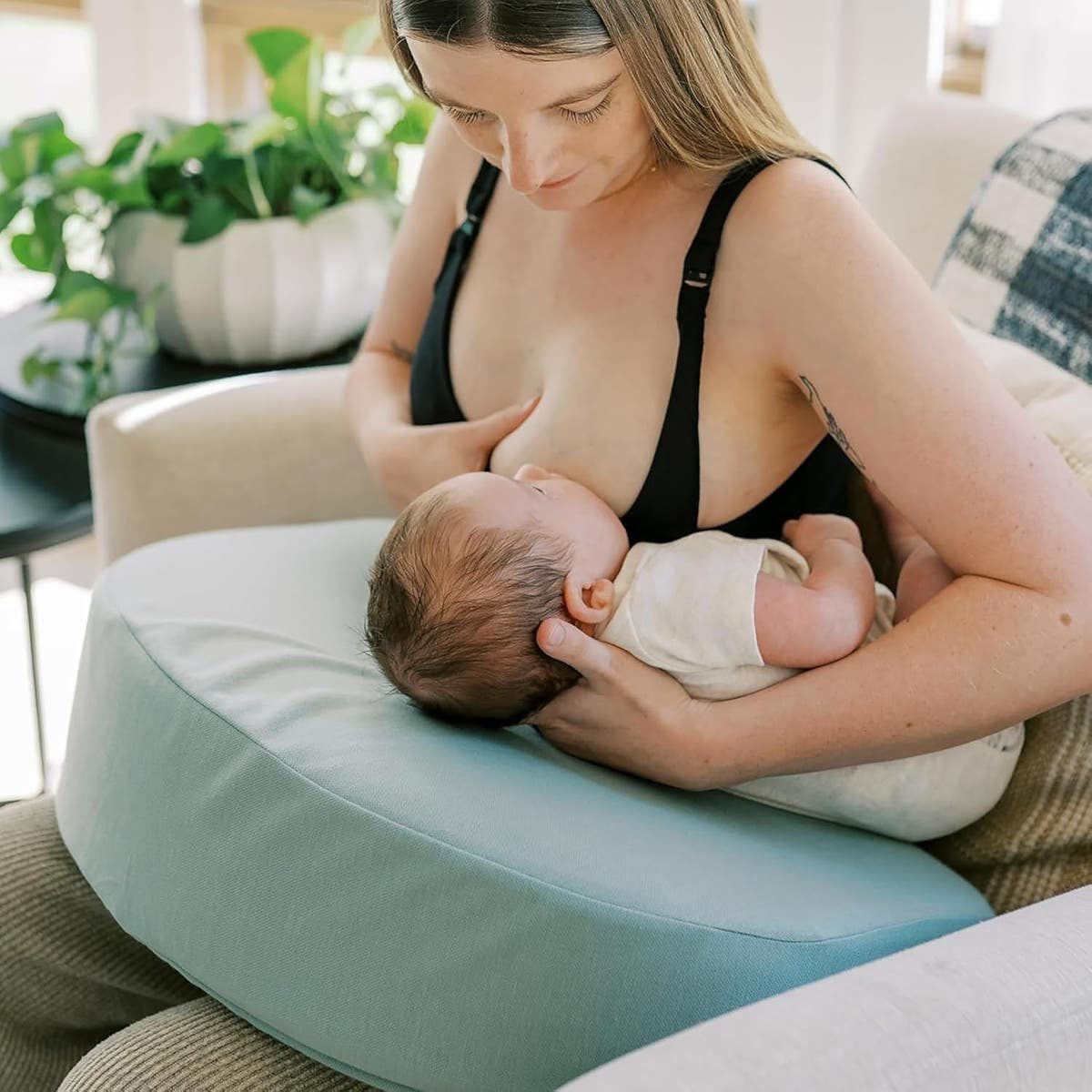
A nursing pillow has one job: raise your baby to breast height so your shoulders, neck, and wrists can relax. The classic crescent-shaped pillow wraps around your waist and suits the cradle and cross-cradle holds. Firmer, flatter pillows with a buckle strap stay in place better for smaller babies and for moms recovering from a cesarean birth, since they can sit higher and away from an incision. Twin pillows are wider and worth it only if you are feeding two babies.
Position matters more than brand. Sit with your back supported and feet flat, place the pillow snugly at your waist, and lay your baby tummy-to-tummy with you, nose level with the nipple. Your elbows should rest, not hover. If your back still aches, add a small pillow behind you or a footstool under your feet; a two-inch change can end weeks of shoulder pain.
- Crescent pillow: Versatile for cradle hold, tummy time later, and supported sitting practice.
- Firm strap-on pillow: Best stability for newborns and for the football hold.
- Travel pillow: Smaller and inflatable styles work for the car or Grandma's house.
- Regular bed pillows: Fine in a pinch, but they slide and usually sit too low.
Frequently Asked Questions
Can I just wear a regular bra and pull it aside?
You can in a pinch, but regular bras are not built to fold down repeatedly, and the band and cups can press on breast tissue as you feed. A nursing bra or a soft bralette with easy access is more comfortable over many feedings a day. Most moms who try both end up preferring the real thing.
How do I wash nursing bras so they last?
Fasten the hooks, place bras in a mesh laundry bag, wash cold on gentle, and air dry. Heat and the dryer break down elastic quickly. Rotating between bras, rather than wearing the same one daily, also gives the elastic a day to recover and extends the life of each bra.
Do I need a nursing pillow if I mostly bottle feed?
Many bottle-feeding parents love one too, because it supports your arm and the baby during long feeds and saves your shoulder. It is not essential, though; a firm couch pillow can do the job. Buy one only if feeding sessions leave your arm or back aching regularly.