Non-Toxic Nail Polish and Safe Dress-Up for Little Kids
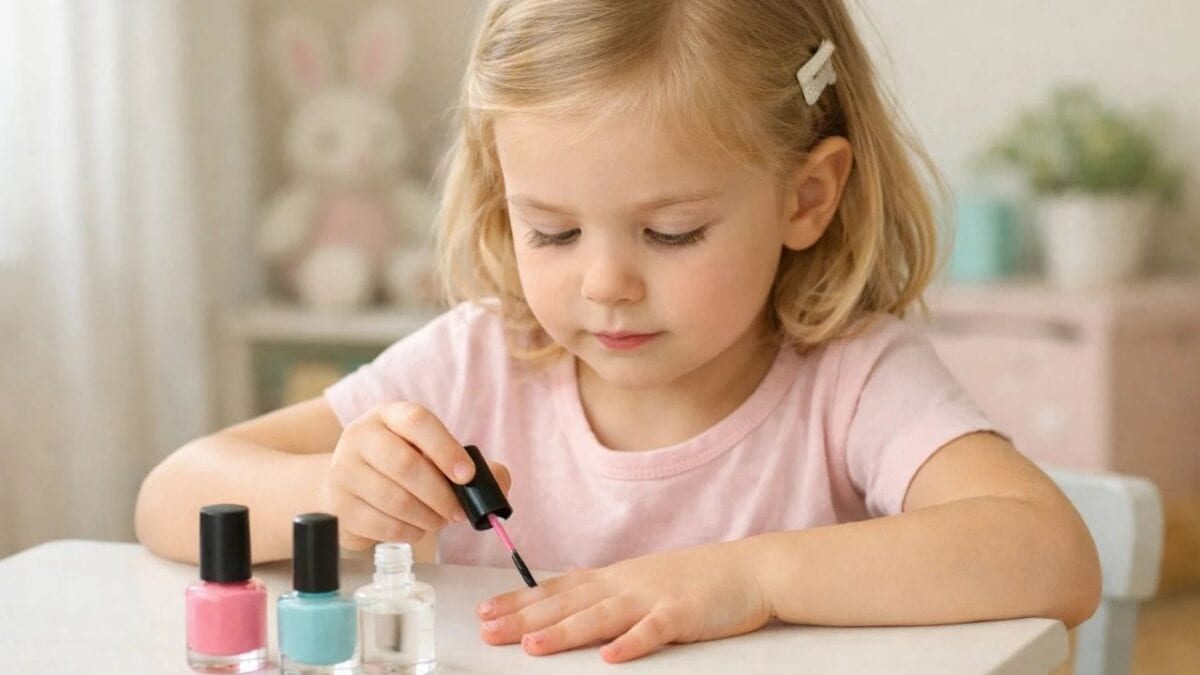
It started with my daughter sitting very still, which is never a good sign, holding my good red nail polish like a tiny chalice. She wanted nails 'like a grown-up lady' for her cousin's birthday, and honestly, I got it. Dress-up and a little sparkle are one of childhood's great pleasures. But the polish in her hand was the strong-smelling, keep-away-from-children kind, and her nails go straight into her mouth when she is nervous. So we went shopping together for the kid-safe version, and I learned how to read the labels like a detective. Here is what I know now.
A note on honesty before we start: 'non-toxic' on a children's cosmetic is a marketing claim, not a government certification. There is no official stamp that grades kids' nail polish. That does not make the good brands meaningless; it means the label-reading skills below are the actual safety system, and they take about thirty seconds per bottle.
Reading a 'Non-Toxic' Label Honestly
The polish world talks in 'free' numbers: 3-free, 5-free, 10-free, each claiming the absence of certain ingredients. The original three to avoid are the ones that built nail polish's bad reputation: formaldehyde, toluene, and dibutyl phthalate (DBP). Better children's brands also leave out formaldehyde resin, camphor, and added fragrance. For a little kid, the simplest good sign is the words 'water-based' on the bottle: those polishes are made to wash or peel off rather than be dissolved off with remover, which is exactly the trade you want for a nail-biter.
- Look for: 'water-based,' a short ingredient list you can mostly pronounce, and an age recommendation printed on the bottle
- Avoid: formaldehyde, toluene, and DBP anywhere in the ingredients, and any polish that smells like a hardware store
- Be skeptical of: vague words like 'natural' or 'clean' with no ingredient list to back them up
- Skip the remover entirely for little kids by choosing peel-off or soap-and-water formulas
- Check for choking-age warnings: many sets are rated 3+ because of small caps and brushes, and that rating is about the parts, not just the polish
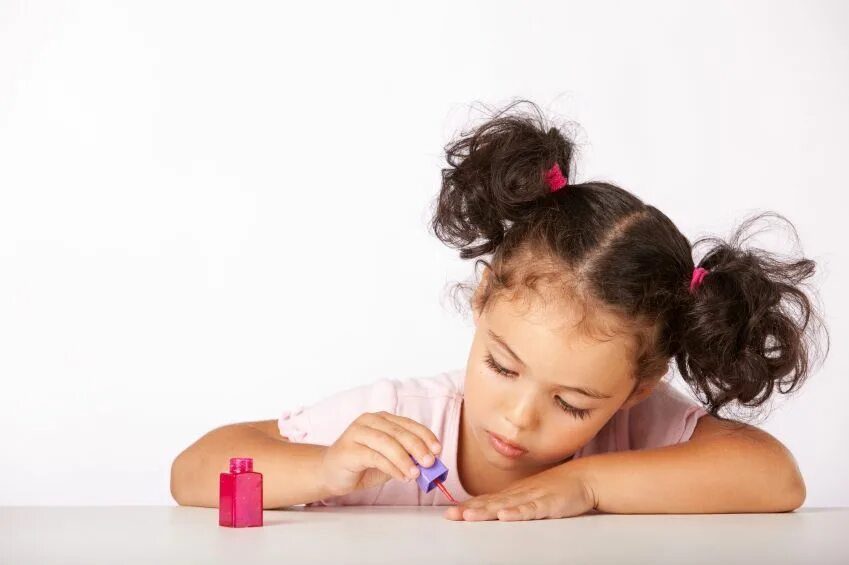
Peel-Off Polish: The Toddler-Friendly Option
Peel-off polish is the hero of this whole category. It goes on like regular polish, dries in a couple of minutes, and when the party is over, or when it starts chipping, which with a four-year-old is roughly the same moment, it lifts off in satisfying little sheets with a fingernail. No remover, no cotton balls, no chemical smell in a small bathroom. A warm bath loosens it too, which makes removal part of an already-planned event.
Set expectations the grown-up way: do nails together, at the table, over a paper towel, as a planned activity rather than a free-range art supply. One thin coat, fingers on the table until dry, then a photo, because the manicure's half-life is short and its glory should be documented. Keep bottles closed and stored with your things, not in the dress-up bin, because even the gentlest polish is not a snack and the brushes are small parts.
Treat kid polish like birthday cake: a delightful, occasional, supervised treat, not an everyday food group. That framing keeps it special, keeps it safe, and somehow makes a four-year-old sit stiller for it.
Dress-Up Safety Checks: More Than the Polish
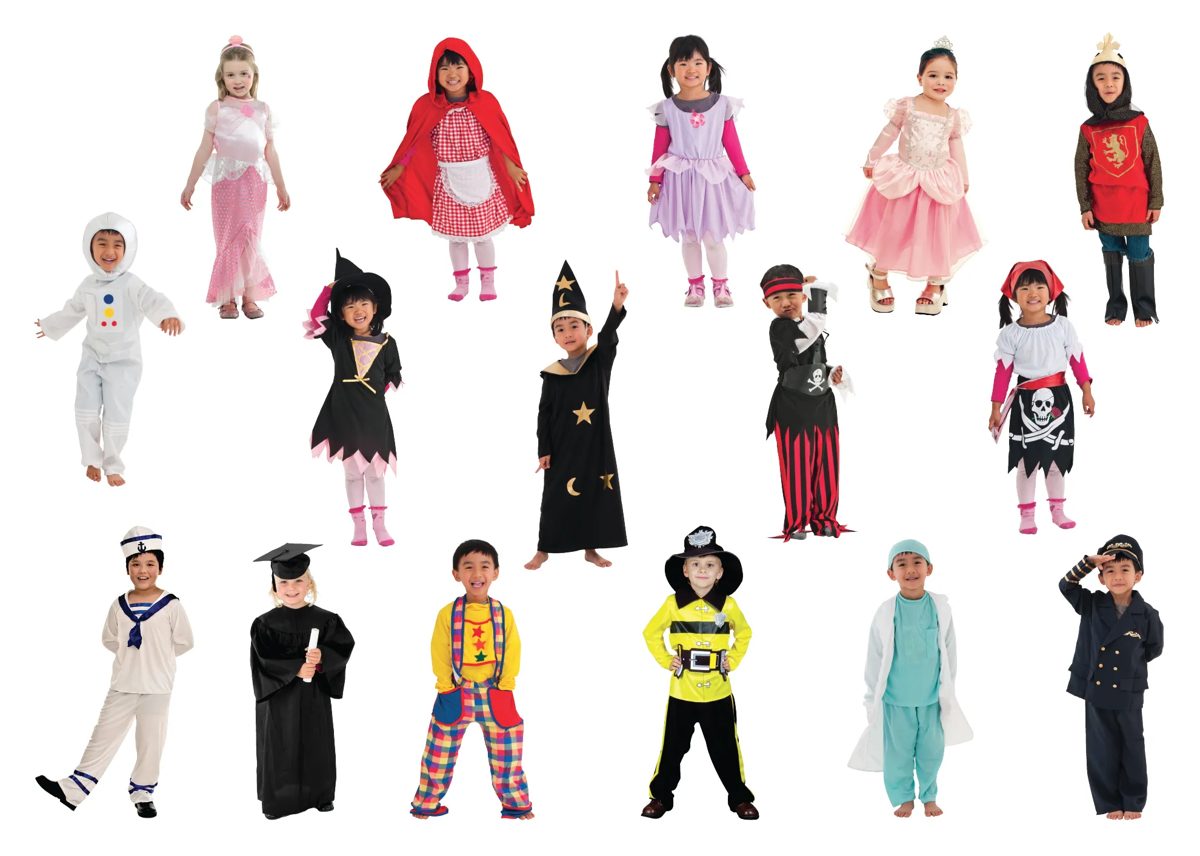
While you are in the dress-up bin, run the same eye over the costumes, because that is where the real hazards hide. Jewelry and costume accessories are the biggest category: necklaces and anything with a cord can tangle or catch, so choose breakaway clasps, keep dress-up necklaces short, and take all of it off for sleep and car rides. Buttons, glued-on gems, and sequins come loose and head for mouths, especially with younger siblings crawling the perimeter, so tug-test decorations before play and retire anything shedding parts.
- Cords and ties: No long sashes, drawstrings, or necklaces for climbing, slides, or sleep; breakaway or nothing
- Shoes: Dress-up heels and oversized grown-up shoes cause more falls than everything else in the bin combined; bare feet or their own shoes for active play
- Masks and hats: Check that eye holes allow real peripheral vision, and skip anything that covers the nose and mouth
- Face paint and makeup: Choose products made and labeled for children, patch-test on an inner arm the day before, and wash off before bed
- Shared makeup: Do not share lip products or eye makeup between kids, and toss anything old, dried out, or smelling off
If a rash, itching, or watery eyes show up after makeup or polish, wash it off with water and mild soap and stop using the product. If you ever see swelling, trouble breathing, or a reaction that spreads, that is urgent: seek medical care right away. This article is general information, not medical advice, and your pediatrician or an urgent care line is the right call whenever a reaction worries you.
Making It Feel Special Without the Worry
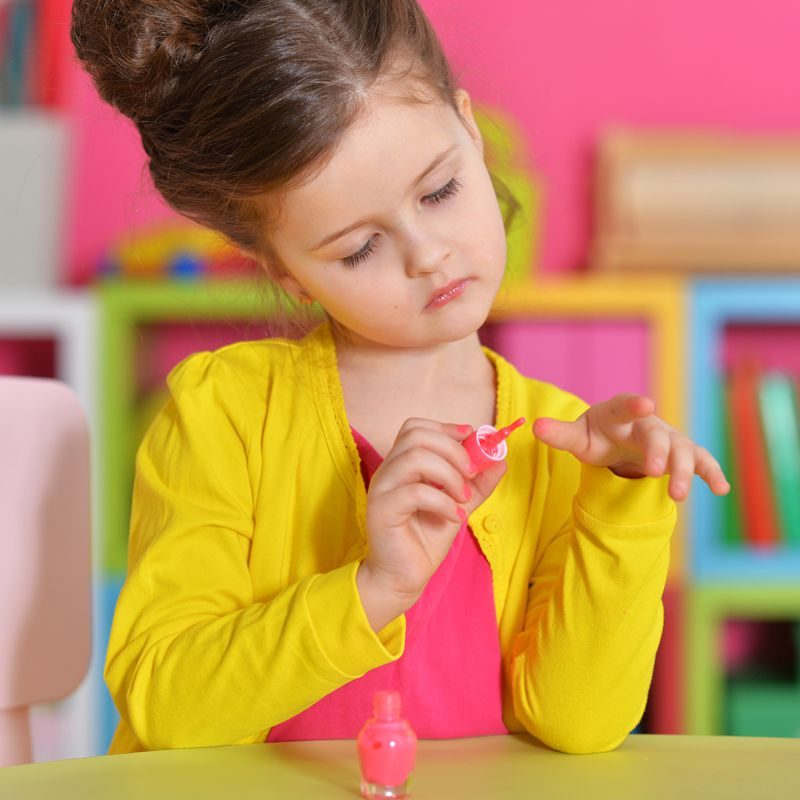
The good news is that none of these checks dim the magic even slightly. A 'salon appointment' at the kitchen table, with a towel, a bowl of warm water for soaking fingers, two peel-off colors to choose between, and a hand lotion finish, is peak luxury to a five-year-old. Add a rule that polish is for home and parties, not for school or the playground, and you have quietly solved the chipped-polish-everywhere problem too. Dress-up stays what it should be: a world of queens, veterinarians, and sparkly superheroes, with the grown-ups having done one quiet pass for cords, buttons, and labels first.
Frequently Asked Questions
At what age can kids use nail polish?
There is no official age, but most children's brands rate their sets for ages three and up, mainly because of small parts and the hand-to-mouth issue. For toddlers, water-based peel-off polish used occasionally, with you applying it and removing it the same day, is the gentlest route. If your child constantly chews their nails or fingers, wait; the polish will spend more time in their mouth than on their nails.
What does '5-free' or '10-free' actually mean?
It means the formula leaves out five, or ten, of the ingredients most commonly flagged in nail polish, typically starting with formaldehyde, toluene, and DBP. Higher numbers are generally better, but the numbers are not standardized between brands, so one company's 5-free may exclude a different five than another's. Read the actual ingredient list when you can; it takes ten seconds and tells you more than the marketing number.
How do I remove kids' polish safely?
If you chose peel-off or water-based polish, warm water and gentle peeling do the job; a bath is the easiest removal session ever scheduled. If a regular children's polish needs remover, choose an acetone-free remover made for sensitive nails, use a small amount in a ventilated room, and wash hands with soap afterward. Never use adult-strength remover on a small child if you can avoid it, and store it up high like any other household chemical.