Store Coupon Policies, Explained: Target, Walmart, and Friends
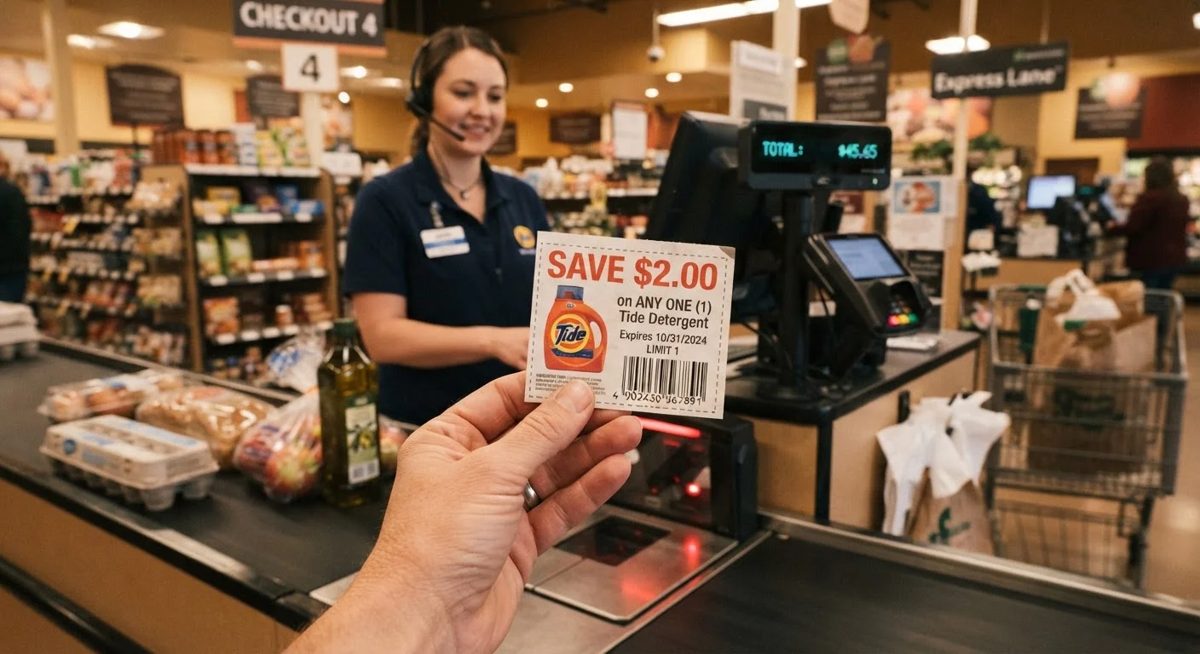
Every couponer has a story about a register that beeped, a line that sighed, and a cashier who was not sure whether two coupons could go on one item. Mine happened at a Target in Bloomington with a cart of diapers and a sleeping baby who was about to stop sleeping. The fix that day was not luck. It was that I finally understood what the store's coupon policy actually said, and which kinds of coupons I was holding. This guide is that understanding, in plain English, so your checkout stays calm even when the register has opinions.
One honest note before we start: coupon policies are store documents, and stores revise them. What follows is how the major chains' policies generally work, written as an overview to help you read the real thing. Before a big stock-up trip, check the current policy on the store's own website, because the current version is the one the register enforces.
The Four Kinds of Coupons (They Are Not Interchangeable)
Most checkout confusion comes from treating every coupon as the same creature. They are not, and the differences are exactly what make stacking possible.
- Manufacturer coupons come from the brand itself: Sunday inserts, printable coupons, and digital offers inside apps like the store's own app labeled as manufacturer offers. They are funded by the brand and generally work at any store that accepts them.
- Store coupons come from the retailer: Target Circle offers, CVS store coupons from the app or coupon machine, Walgreens store coupons in its app and booklet. They are funded by the store and only work at that chain.
- Digital coupons are a delivery method, not a type. A digital coupon can be a manufacturer coupon or a store coupon, and which one it is decides what it can stack with.
- Rewards like ExtraBucks and Walgreens Cash are not coupons at all. They are closer to store money you earned on a previous deal, and they usually spend on top of whatever coupons you use today.

Stacking, Explained: What "One Per Purchase" Really Means
Stacking means using one store coupon and one manufacturer coupon on the same item, which most major chains generally allow, because the store and the brand are each funding part of the discount. The phrase that trips people up is "one coupon per purchase." In coupon language, a purchase is an item, while a transaction is your whole cart. So "limit one per purchase" usually means one of that coupon on each item, not one in your entire order. "Per transaction" is the stricter phrase, and it does mean one for the whole cart.
Other fine print worth reading: a coupon generally cannot exceed the price of the item, and most stores will not hand you cash back for the difference. Many chains limit identical coupons to a small number per transaction, often four, as a fraud-prevention rule. When in doubt, the app's offer details are your best friend, and a polite question at the service desk beats a debate in lane six.
Target, Walmart, and the Grocery Chains: The Big Differences
Target runs on Target Circle. You can combine a Target Circle store offer, a manufacturer coupon (paper or digital), and a sale price on one item, and Target Circle earnings and gift card promotions layer on top. Target is also home to the gift card deal: buy a set amount in a category, get a gift card for a future trip. Its policy, published on its website and in the app, is one of the clearer ones to read.
Walmart is the minimalist of the group: no loyalty program, no store coupons of its own in the usual sense, and an everyday-low-price model instead. Walmart generally accepts manufacturer coupons, paper and digital, and its policy has historically allowed a coupon's overage to apply to the rest of your basket in some situations, which is unusual. Because there is no stacking with store coupons, Walmart wins on base price for some items and loses on promoted items at the drugstores. Compare the final price, not the format.
Grocery chains like our Minnesota supermarkets each write their own rules. Many load digital coupons in their apps, many cap the number of identical coupons, and double-coupon promotions, where they exist, are special events rather than daily policy. Learn your own store's pattern: find its policy page, read it once, and screenshot the stacking paragraph.
The register is not the referee. The written policy is. Read it once at your kitchen table and you will never have to argue it at a checkout again.

Limits, Rain Checks, and Fine Print Worth Knowing
- Quantity limits are normal. Sale ads and policies often cap hot items at a few per household. That is the store keeping shelves stocked for everyone, and planning around it is part of the game.
- Rain checks still exist at many chains. If a sale item is out of stock, ask at the service desk; some stores issue rain checks honoring the sale price later. Policies on pairing them with coupons vary, so ask.
- Clearance is usually final. Many policies treat clearance prices as ineligible for additional coupons or price adjustments. A great clearance price rarely needs help anyway.
- Digital coupons typically cannot be reused. Most digital offers are single-use and tied to your account. Clip thoughtfully; clipping early can lock an offer you meant to save.
When the Register Beeps: A Calm Troubleshooting Script
It will happen. Stay pleasant and work the checklist. First, confirm the item matches the coupon exactly: brand, size, count, and variety are the usual culprits, especially "any" offers that quietly exclude the smallest size. Second, check the date and whether you already used that digital offer. Third, if everything matches and the policy supports you, ask politely: "Would you mind trying it once more? I believe this one is a store coupon and this one is a manufacturer coupon." If it still fails, you have two graceful exits: pay and contact customer service later with your receipt, or set the item aside. What never helps is holding the line hostage. Stores remember kind regulars, and kind regulars get the benefit of every doubt.
Frequently Asked Questions
Can I really use two coupons on one item?
Generally yes, when they are different types: one store coupon plus one manufacturer coupon is the standard stack at most major chains, on top of the sale price. Two manufacturer coupons on one item is the combination registers reject. Always confirm in the store's current published policy, since chains revise their rules.
What does "one per purchase" actually limit?
In coupon wording, a purchase is a single item and a transaction is the whole order. "One per purchase" usually allows that coupon on each matching item you buy. "One per transaction" is the stricter limit of a single use per cart.
Where do I find a store's official coupon policy?
On the store's website, usually linked in the footer under customer service or help, and often summarized inside the store's app. Read the stacking and limits sections once, screenshot them, and recheck after major updates, because the current version governs your checkout.