Building Blocks and Talking Toys: Open-Ended Play Picks for Toddlers
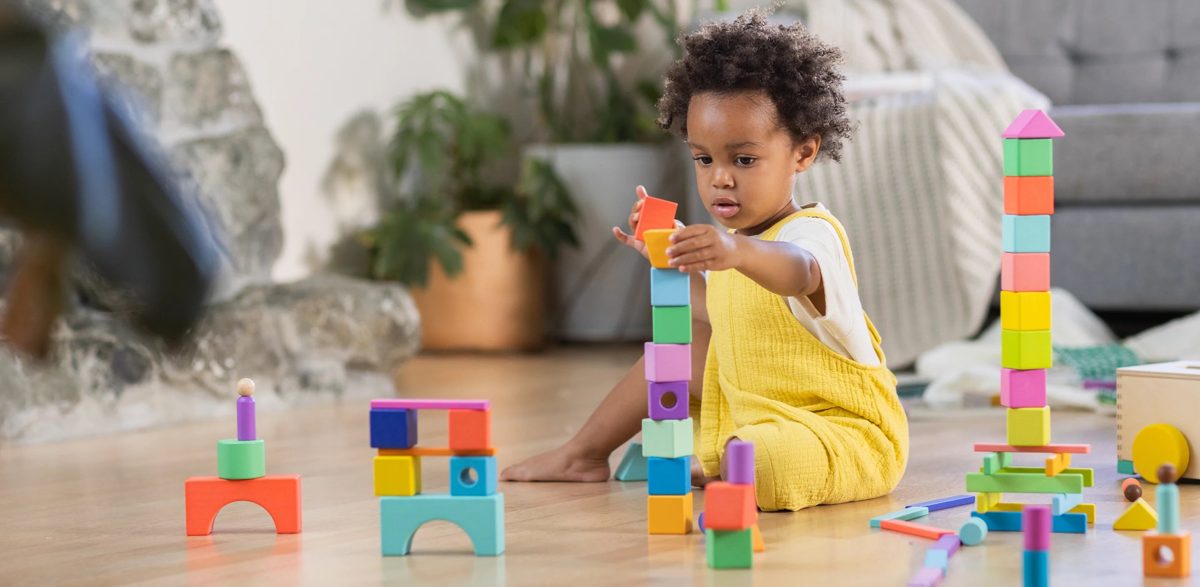
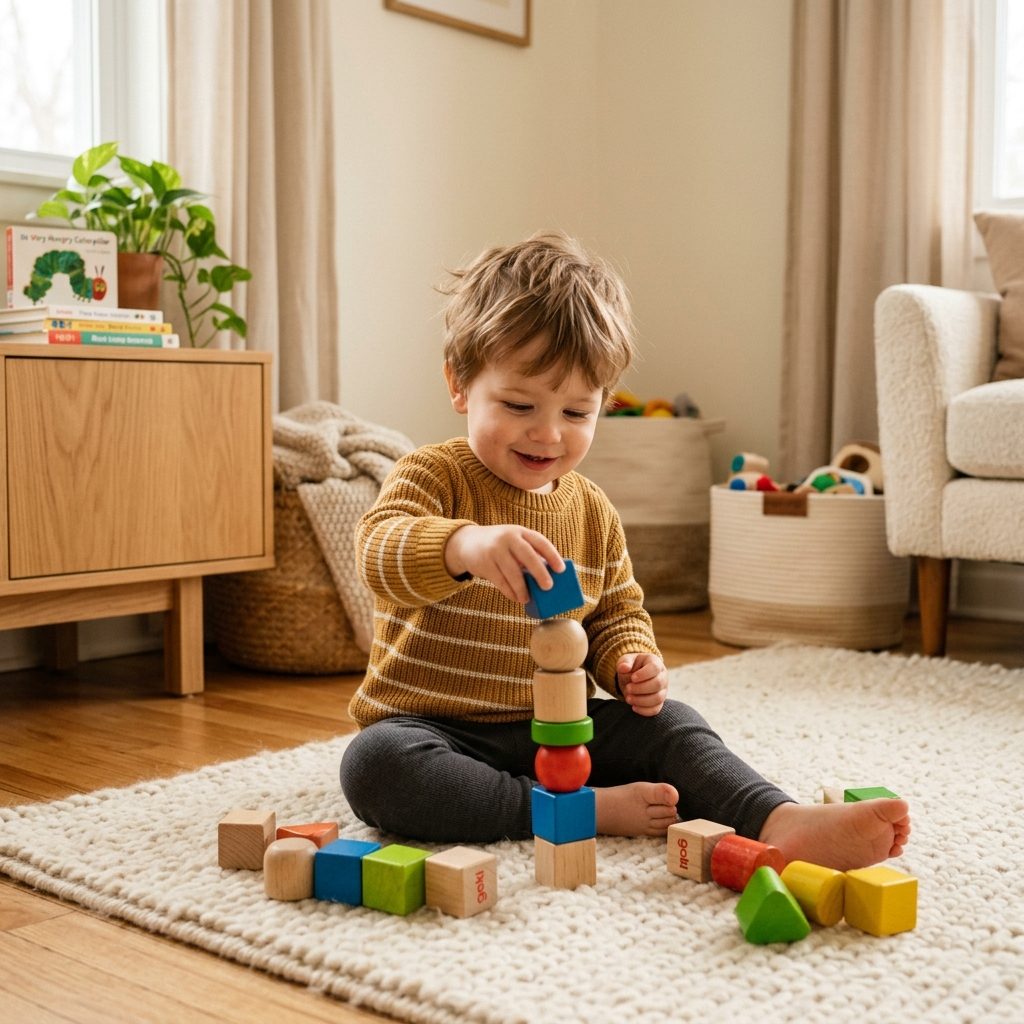
Last winter, during one of those Minnesota stretches when nobody leaves the house for three days, my toddler ignored the light-up, song-playing toy she had begged for at Christmas and spent an entire afternoon stacking wooden blocks, knocking them down, and stacking them again. The singing toy lasted eleven minutes. The blocks lasted until dinner, and then she asked for them again the next morning.
That week taught me what early childhood teachers have said for years: the toys that do the least often invite the most play. Open-ended toys have no single right answer, no script, and no batteries to die at the worst moment. Here is how to choose building blocks and simple talking toys well, match them to your child's age, and keep them feeling new without buying more.
Open-Ended Play Versus Toys That Play for Your Child
An open-ended toy can become a tower, a bridge, a phone, a sandwich, or a fence for plastic cows. Your child supplies the idea, the story, and the ending. A closed, electronic toy usually works the other way: press a button, get a sound, repeat. There is nothing evil about a toy that sings, and a talking toy that names colors or tells a short story can support language. The concern is balance. When a toy does all the talking, your toddler mostly listens and pushes, and the play ends when the novelty does.
A good test before you buy: can this toy be used three different ways on three different days? Can it be played with quietly? Does it still work when the batteries die? If the answer is yes, it will probably earn its shelf space. Keep a few electronic favorites if your child loves them, but let blocks, figures, and simple pretend toys carry most of the day.
Building Blocks by Age and Stage
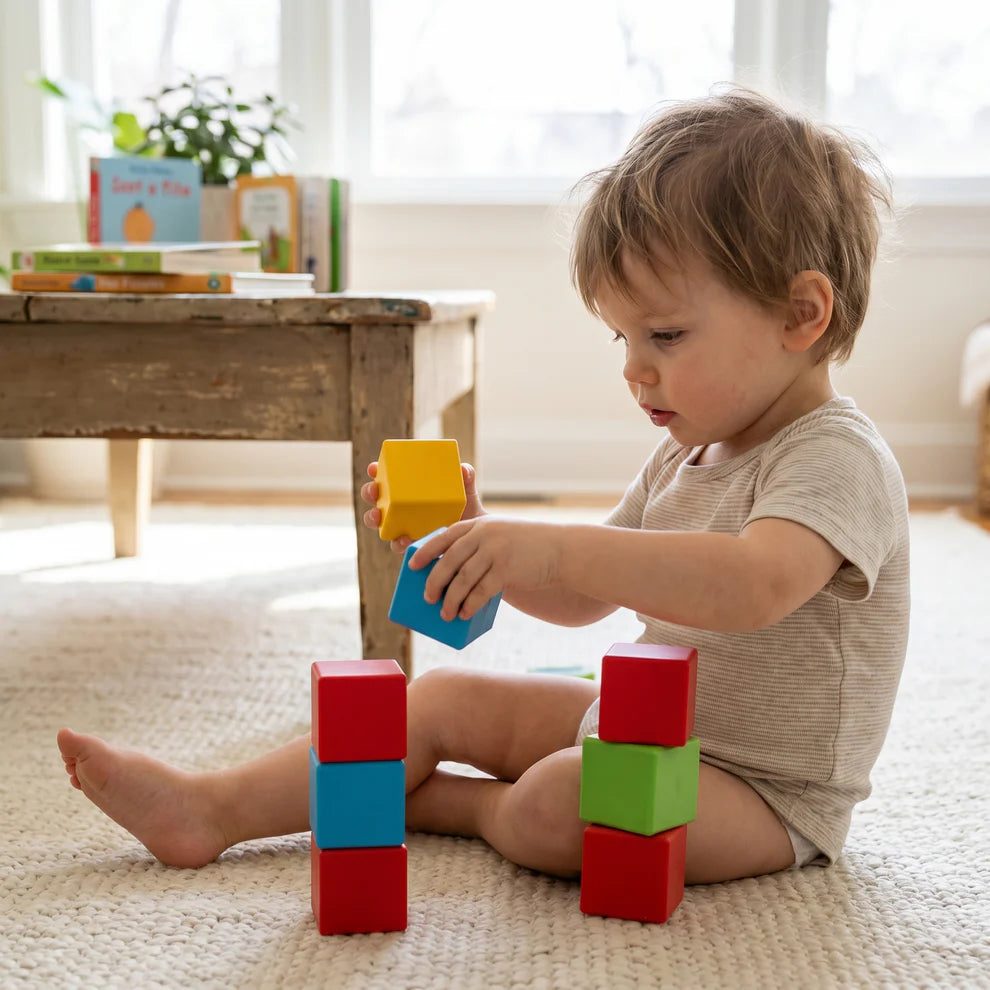
Blocks grow with your child, but the right size and material change a lot between a first birthday and age four. Start big, soft, and easy to grip, then add precision as hands get steadier and ideas get bigger.
- Ages 12 to 18 months: Soft foam or fabric blocks and large stacking cups. Expect mouthing, banging, and carrying blocks around more than building.
- Ages 18 months to 2 years: Large interlocking bricks and simple wooden blocks. First real towers of two to five blocks, plus lots of proud demolition.
- Ages 2 to 3: A classic wooden unit block starter set, magnetic tiles with adult supervision, and blocks with ramps or vehicles. Bridges, rows, and enclosures appear.
- Ages 3 to 4 and up: Smaller interlocking sets, more unit blocks for castles and towns, and add-ons like people, animals, and road pieces for storytelling.
Whatever the age, check the basics: smooth edges, non-toxic finishes, pieces large enough to pass your child's choking test for their age, and a set big enough to build something satisfying. Twenty perfect blocks beat sixty tiny ones for a two-year-old. Store them where your toddler can reach them without help, because independence is part of the point.
Talking Toys That Actually Support Language
Talking toys earn their keep when they prompt your child to talk back, not just listen. Look for toys that ask simple questions and leave a real pause, tell very short stories your child can retell, or let you record a familiar voice. A plush that says a grandparent's recorded phrase can be genuinely comforting, and a simple story player with swappable cards gives toddlers control without a screen.
Be pickier about volume and content. Choose toys with a true off switch and a low volume setting, phrases that are clear and unhurried, and no advertising characters shouting catchphrases on a loop. Then use the toy with your child at first: repeat its words, expand them by one word, and let your toddler take turns pressing and answering. The toy starts the conversation; you are still the best language teacher in the room.
What Open-Ended Play Builds While Nobody Is Watching
Block play looks simple, but it quietly stacks up skills. Stacking and balancing build fine motor control and early problem solving: why did it fall, and what happens if the big block goes on the bottom? Building alongside a sibling practices sharing space, negotiating, and repairing both towers and feelings. Pretend play with blocks grows vocabulary and sequencing, because a castle needs a door, then a road, then a reason for the dragon to visit.
There is also an early math thread running through it all. Toddlers sort blocks by color and size, count them into a truck, compare taller and shorter, and learn words like under, beside, and through by doing, not by worksheet. None of this requires you to run a lesson. Your job is mostly to provide time, floor space, and the occasional admiring audience.
The best toy in our house is the one I almost gave away: a plain set of wooden blocks that has been a zoo, a garage, a birthday cake, and about four hundred towers.
Rotate Toys Instead of Buying More
When blocks suddenly seem boring, the problem is usually too much choice, not too few toys. Toy rotation fixes that for free. Keep about a third of the toys out, store the rest in bins out of sight, and swap every one to two weeks. A set that returns after a break feels brand new, and a smaller selection helps toddlers play longer and clean up faster.
- Step 1: Gather all the blocks and play sets into one place on a quiet evening
- Step 2: Sort into three bins by type, keeping one complete building option in each bin
- Step 3: Put one bin out, store the other two, and note the swap date on your phone
- Step 4: Add one fresh pairing each rotation, like blocks plus animal figures, or tiles plus toy cars
- Step 5: Donate or pass along anything untouched through two full rotations
Pairing is the secret trick. Blocks alone are fine; blocks plus a few figures become a town. Blocks plus a scarf become a construction site with a tent. You are not buying new toys, you are introducing old ones to each other.
Frequently Asked Questions
How many blocks does a toddler actually need?
Most toddlers are happy with 30 to 60 large blocks or bricks to start. That is enough to build real structures without overwhelming cleanup. Add pieces at birthdays if building becomes a favorite, rather than starting with a giant set.
Are magnetic tiles safe for toddlers?
Quality magnetic tiles with sealed, riveted casings are popular for ages 3 and up, and many families use them earlier with close supervision. Inspect them often, discard any cracked tile immediately, and follow the age guidance on the box, since loose magnets are a serious hazard.
My toddler only knocks towers down. Is that normal?
Completely normal, and it is learning, not misbehavior. Knocking down teaches cause and effect and is often the most exciting part for a one or two-year-old. Build together, celebrate the crash, and the careful building phase will follow.