Family Advent Calendars: Countdown Ideas Beyond Chocolate
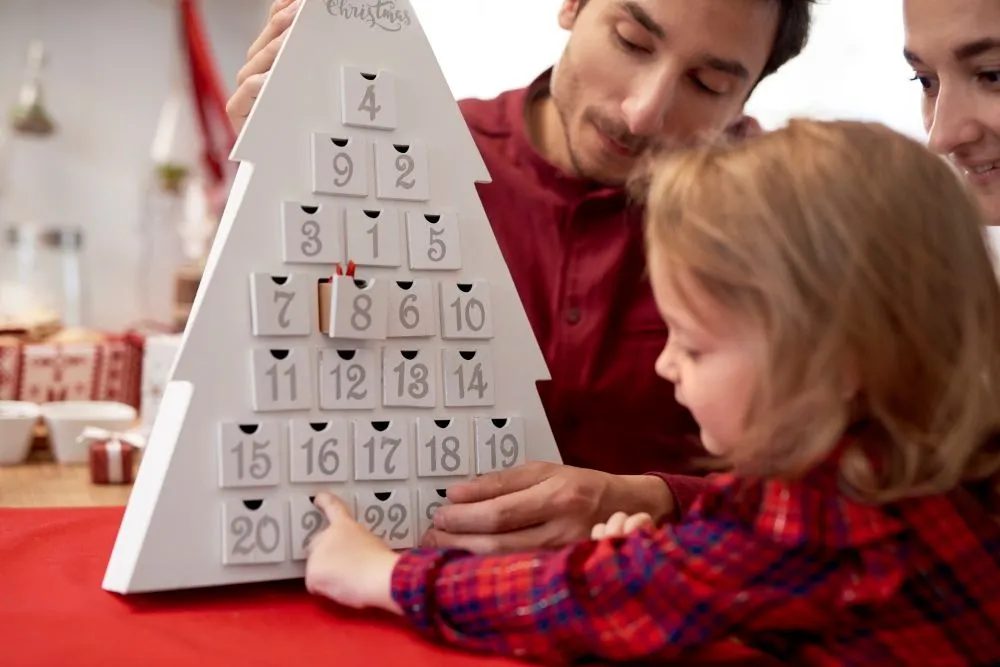
Our first family advent calendar was a chocolate one from the grocery store, and it worked exactly as designed: a tiny chocolate each morning, gone by December 3 in spirit if not in fact, because someone, no names, got ahead of the calendar. The next year I made an activity calendar instead, little slips of paper in envelopes, and it changed our whole December. The kids checked the envelope before breakfast with the seriousness of a weather report.
An advent calendar does not have to be candy, and it does not have to be elaborate. Here are the versions that have worked for our family: daily activities, a cheap DIY countdown, and a kindness calendar that gives instead of gets.
The Activity Calendar: Simple Daily Moments
The secret to an activity calendar is keeping the activities genuinely small. December is already full. A good activity takes five to twenty minutes, costs nothing or nearly nothing, and can survive being swapped to a different day when life happens. Write the activities on slips, but keep a parent copy of the list so you can quietly trade a busy Tuesday's activity for a calm Sunday's.
- Make hot cocoa with the good marshmallows and drink it by the tree.
- Drive or walk to see lights in one neighborhood you have never visited.
- Read a holiday book by flashlight in a blanket fort.
- Bake one batch of cookies, some to eat and some to deliver to a neighbor.
- Draw a picture for a grandparent and mail it the same day.
- Have a snow picnic: thermoses and cookies on a blanket outside, ten minutes, very Minnesota, deeply memorable.
- Call a faraway relative and let the kids do most of the talking.
- Make paper snowflakes and cover one window completely.
- Donate one toy in good shape, chosen by each child.
- Movie night with popcorn and every blanket in the house.
- Write a thank-you note to a teacher, coach, or bus driver.
- Breakfast for dinner, with the holiday pancakes.
Mix in a few pure-treat days, a candy cane, a small chocolate, so the calendar keeps its sparkle. And leave two or three envelopes as wild cards that say your choice, because December always produces a day when the planned activity simply cannot happen, and a wild card turns a failure into a feature. If your kids are older, let them write a few of the slips for the parents. Their ideas for what counts as a December treat are reliably better than ours.
DIY Calendars on a Budget
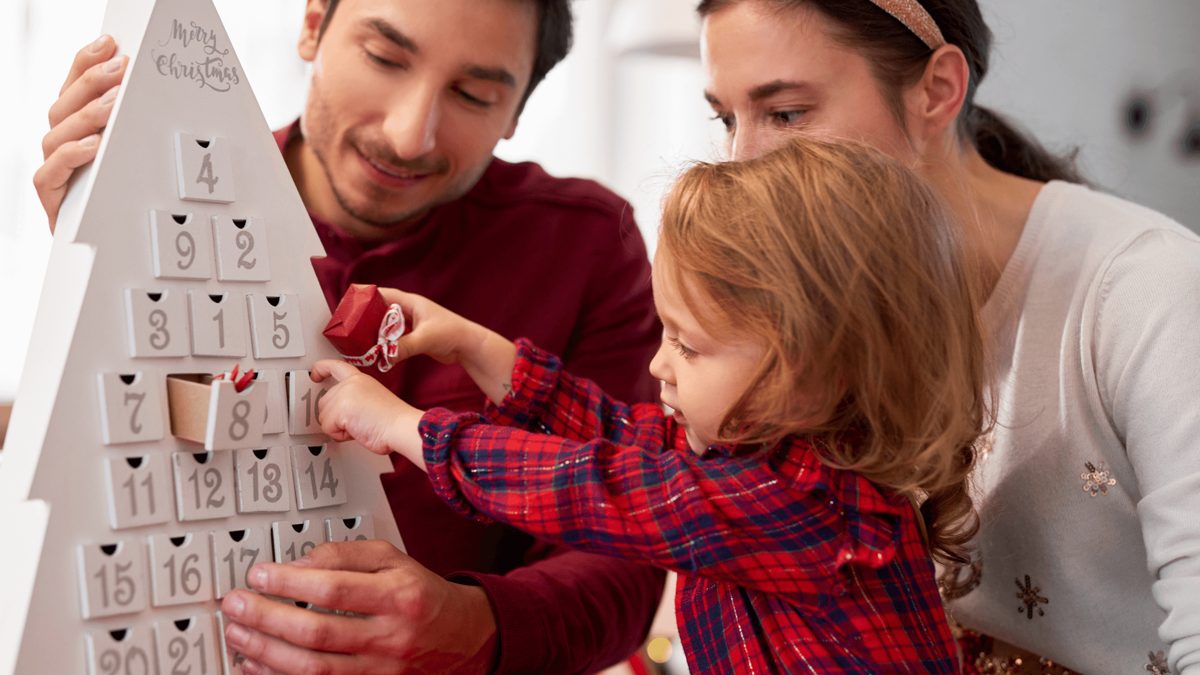
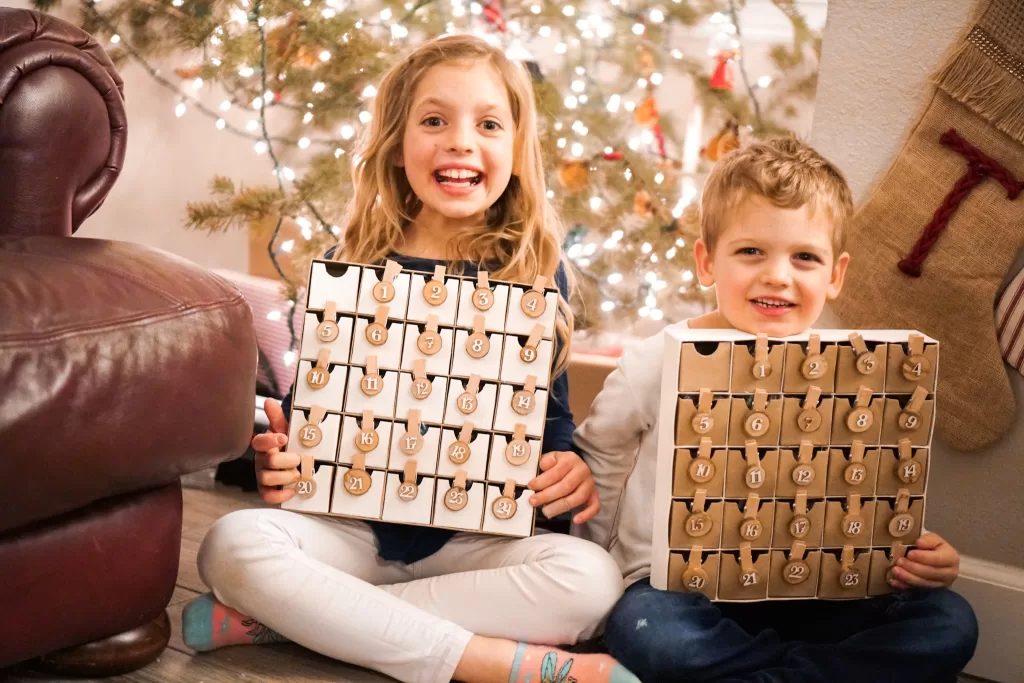
You do not need a craft-store kit. Our most-used calendar is twenty-four small envelopes pinned to a ribbon across a doorway, made from envelopes we already had. Other nearly free versions: paper lunch bags folded and numbered on a shelf, a muffin tin with foil over each cup and a slip inside, socks or mittens clipped to a string (very appropriate in this state), or a simple numbered list on the fridge with a sticker covering each day's activity until it is revealed.
Total cost for a DIY activity calendar: $0 to $10, mostly paper and envelopes. If you want a reusable one, wooden or fabric calendars with pockets run $20 to $40 and pay for themselves by the second year. Buy one in January clearance for a few dollars if you can; future you will feel extremely clever.
The calendar is not twenty-four gifts. It is twenty-four small appointments with your kids in the busiest month of the year, and that is why it works.
Kindness and Reverse Advent Calendars
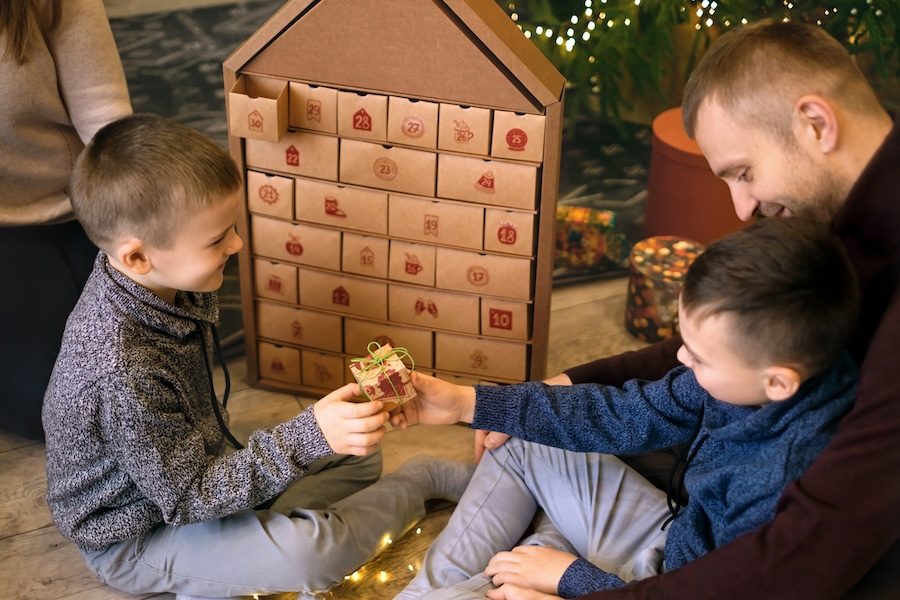
The reverse advent calendar flips the idea: instead of taking something out each day, you put something in. A box by the door collects one item a day, a can of soup, a box of pasta, a pair of new socks, and on December 23 or 24 the full box goes to a food shelf. It costs roughly $15 to $30 spread across the month if you add one grocery item a day, and kids take surprising ownership of choosing each day's item.
A kindness calendar works alongside or instead: each day's slip names one kind act small enough for your youngest child to do. The acts that have worked best for us:
- Hold the door for someone at school, the library, or the store.
- Write a kind note for a classmate, a sibling, or a neighbor.
- Feed the birds or refill a feeder together on a cold morning.
- Shovel a neighbor's step or bring in their mail on a snowy day.
- Choose one toy to donate and deliver it together.
- Say one specific thank-you to someone who helps your family every week.
In Minnesota, that shoveling one is not symbolic. Keep the acts small and doable, and let older kids suggest entries for next year's list.
Many families blend all three: a calendar where most days are activities, a few are small treats, and several are kindness or giving days. There is no official ratio. The blend that fits your family's December is the right one, and a calendar that gets skipped on the chaotic days and enjoyed on the rest is still doing its job.
Frequently Asked Questions
When should I make an advent calendar?
The last week of November is the sweet spot: close enough to feel festive, early enough to avoid the December rush. Writing twenty-four slips takes about twenty minutes once you have a list of ideas. Reusable calendars bought in January sales make next year even easier.
What if we miss a day?
Double up the next day or quietly remove the slip. Kids are flexible about this, especially if two activities in one evening feels like a bonus event. The calendar serves the family, not the other way around.
Are store-bought advent calendars worth it?
They can be, especially the simple chocolate ones at $2 to $5, which are a perfectly good tradition. The expensive toy-filled calendars, $25 to $50 and up, often deliver tiny novelties that are forgotten by January. If your kids love the ritual of a daily door, an activity calendar gives the same ritual with more to remember.