Best Kitchen Play Sets for Toddlers: What to Check Before You Buy
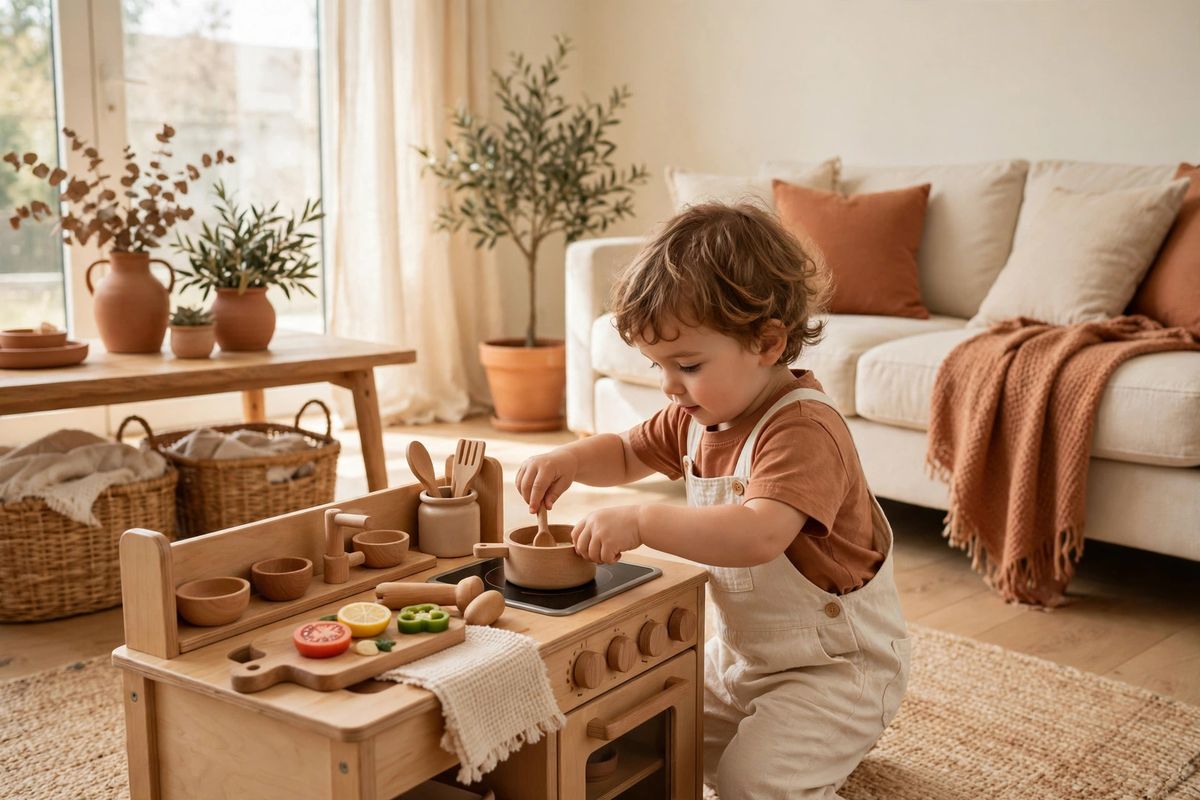
Few toys earn their floor space like a good play kitchen. Toddlers who cannot yet reach a real counter will spend long, happy stretches stirring empty pots, serving pretend soup, and running a restaurant with a staff of stuffed animals. When we first wrote about play kitchens years ago, one sturdy set became a top holiday pick in our house, and the reasons have not changed: open-ended pretend play, practice with real-life skills, and a toy that grows from first steps through the preschool years. The trick is choosing well, because play kitchens range from tiny countertop sets to furniture-sized units. Here is what to check before one takes up residence in your home.
What Toddlers Actually Do with a Play Kitchen
Watch a toddler at a play kitchen and you will see a curriculum disguised as play. They imitate the cooking they watch at home, which builds vocabulary fast: stirring, pouring, hot, more, and all done appear early and often. They practice fine motor skills turning knobs, opening doors, and fitting lids on pots. They begin early social play, offering you a cup of pretend coffee and waiting for your reaction. Older toddlers add sequencing, making a whole meal in order, and simple pretend scenarios like a bakery or a birthday party. A kitchen that supports all of that needs working doors, turnable knobs, and enough counter space for a small chef and a sous-chef sibling.
The Checklist: What to Check Before You Buy
- Size against your space. Measure the wall it will live on, then check the footprint. A compact kitchen suits apartments; a corner or L-shaped design suits a playroom.
- Height for your child's age. Counters around knee-to-waist height on your toddler work best. Some models have adjustable legs or a taller build that lasts longer.
- Stability. The unit should not wobble or tip when a toddler pulls up on it or leans into an open oven door. Wall anchoring is a smart step for taller units.
- Materials and finish. Wooden kitchens feel sturdy and quiet; plastic ones are lighter, often cheaper, and easy to wipe down. Either way, look for smooth edges and a finish that survives damp cloths.
- Doors, knobs, and sounds. Doors that open and close smoothly, knobs that click, and burners that turn get used daily. Battery sound effects are optional; many families end up removing the batteries, and that is fine.
- Storage. Cabinets and an oven cavity double as storage for the play food. Closed storage keeps the room calmer and pieces from migrating.
- Assembly time. Some kitchens take twenty minutes, others an entire evening with a hundred screws. Read the assembly notes before a holiday deadline.
Types of Play Kitchens, and Who They Suit
Countertop and portable sets are the smallest option, good for travel, grandparents' houses, and very young toddlers who play seated. Classic single-wall kitchens are the middle ground most families choose: a sink, stove, and oven in one unit that fits almost anywhere. Larger corner or island kitchens give two or three children room to play at once and tend to stay interesting the longest, but they claim real floor space. All-in-one sets bundle the kitchen with play food and utensils, which saves a second purchase, while bare units let you choose accessories yourself. There is no wrong style here, only the one that matches your rooms and your child's playmates.
One more practical check: how the kitchen handles real life. Toddlers drag cups of actual water to a play sink, press sticky fingers on every surface, and occasionally color outside the lines on the furniture itself. Finishes that wipe clean with a damp cloth, and parts without deep crevices, save real effort. If the set includes fabric items like oven mitts or an apron, washable fabric is a genuine plus. It also helps to peek at replacement-part availability and whether extra shelves or hooks can be added later; the best kitchens adapt a little as play gets more elaborate, instead of being replaced the moment your child turns four.
Accessories That Get Used, and Those That Do Not
A small, well-chosen set of accessories beats a giant bin of plastic food. Start with the workhorses:
- Two pots with lids, a skillet, and a spatula and spoon set
- A handful of play food in recognizable shapes: eggs, fruit, bread, cheese
- Plates, cups, and cutlery for two, so a friend or sibling can be served
- A play phone or order pad for restaurant games with older toddlers
- An apron in a size your child can manage, for pure chef pride
What tends to gather dust: huge food sets with dozens of tiny pieces, realistic appliances that do one noisy trick, and any accessory small enough to vanish under the couch weekly. Add pieces slowly, at birthdays and holidays, and the kitchen stays fresh for years.
Frequently Asked Questions
What age is right for a first play kitchen?
Most toddlers are ready between 18 months and 2 years, when they stand steadily and start imitating everyday routines. Younger toddlers use the doors and knobs most; the pretend cooking deepens through ages 3 to 5.
Wood or plastic: which lasts longer?
Both can last for years. Wooden kitchens are heavier and sturdier and often get handed down; plastic kitchens are lighter to move, easy to clean, and kinder to budgets. Condition and stability matter more than the material itself.
How do I keep play food pieces from taking over the house?
Store the accessories inside the kitchen itself and keep the collection small on purpose. A quick tidy-up game, putting every item back in the oven or fridge before dinner, turns cleanup into part of the play.