Best Travel Booster Seats for Toddlers and Preschoolers
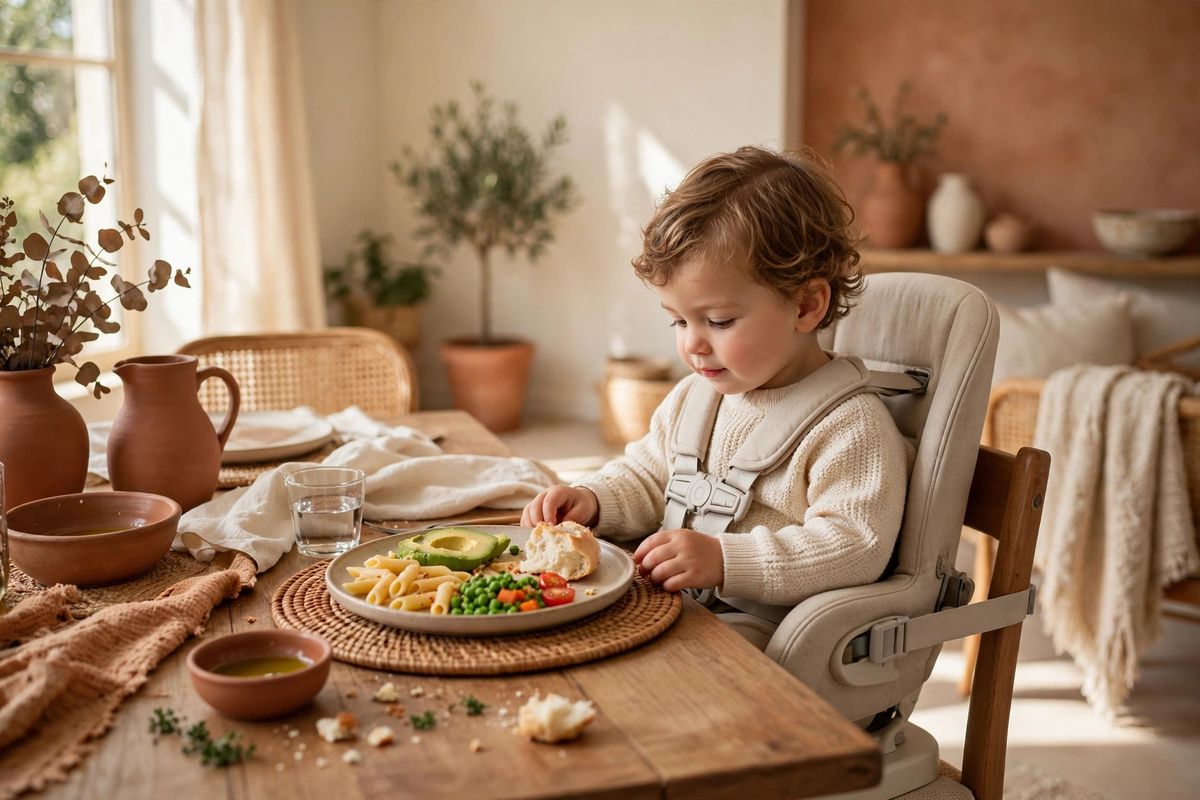
The scene is a busy airport restaurant, your toddler is sliding off a regular chair like it is a playground slide, the high chairs are all taken, and your flight boards in forty minutes. This is the moment travel booster seats exist for. We have eaten in diners, cabins, grandma's kitchen, and more than a few rest-stop picnic tables, and a small booster that lifts your child to the table can turn a chaotic meal into an almost normal one.
There is no single best booster for every family, because trips differ. Instead of chasing rankings, it helps to know the types, what to look for, and how to match a seat to your child and your travel style.
The Main Types of Travel Booster Seats
The classic travel option is the tray booster: a compact seat with its own tray that straps onto a regular dining chair. It is the most supportive style for younger toddlers, works at restaurant tables and kitchen counters alike, and the tray gives wiggly kids a defined space. The trade-off is bulk; even the slimmest models take real room in a suitcase.
Fabric and inflatable boosters sit at the opposite end of the spectrum. These cushion-style seats lift your child a few inches, weigh almost nothing, and tuck into a diaper bag or carry-on. They offer no straps to the chair and no harness of their own in most cases, so they suit older, steadier preschoolers who mostly need height, not containment.
Between those extremes you will find folding plastic boosters and simple tray-less chair boosters that strap securely to a dining chair and raise your child to table height. These are favorites for visiting family, because they live happily in a coat closet between trips.
- Tray boosters: most support for younger toddlers, bulkiest to pack
- Inflatable and fabric boosters: lightest and smallest, best for older preschoolers
- Folding boosters: a middle ground that stores flat
- Chair-strap boosters without trays: great for eating at the table with everyone
What to Look For Before You Buy
Start with fit for your child. Check the maker's stated age, weight, and height ranges, and be honest about your child's stage. A travel booster is a dining seat, not a car seat, and it only works well when your child can sit up steadily and stay seated with reasonable cooperation. If your toddler is still in the enthusiastic climbing phase, a strapped tray style is the wiser pick.
Then look at how the seat attaches and cleans. Straps should secure the booster to a chair in two places, underneath and around the back, and buckles should be ones you can work with one hand while holding a plate with the other. Smooth plastic and removable, washable covers matter more than cute patterns, because travel meals are spaghetti in rental kitchens and yogurt tubes in airport lounges.
Packability: The Test That Decides Everything
A travel booster you leave at home is just furniture. Weigh the seat against your actual trips. Driving to grandparents a few times a year? Almost any style works, and the sturdy tray booster can ride in the trunk. Flying twice a year with carry-ons only? The inflatable or folding seat wins easily, and you will actually bring it, which is the entire point.
My rule for all travel gear with kids: the best version is the one that makes it into the bag. Light and simple beats perfect and left behind.
Measure your most-used suitcase or diaper bag pocket before ordering, and practice the fold or inflation at home. The middle of a restaurant, with a hungry toddler, is a poor classroom for new buckles.
It is also worth thinking about who else will use the seat. Grandparents who host Sunday dinners may happily keep a sturdy chair-strap booster at their house, while the ultralight cushion lives in your travel bag. Many families end up owning two styles for exactly this reason, and that is not excess, it is matching the tool to the trip. If budget allows only one, choose based on your most common outing in the next six months, not the most exotic trip you hope to take someday.
Using a Travel Booster Safely Away From Home
Only use chair-strap boosters on sturdy dining chairs, pushed up to the table, and always use every strap the design provides. Never place a booster on a stool, a wobbly folding chair, or a countertop, and never leave your child unattended in one, even for a quick trip to the buffet. Children rock, push off tables with their feet, and test gravity with great enthusiasm.
At restaurants, ask for a chair with a solid back, strap the booster on before your child climbs up, and position your child within arm's reach. When the meal ends, a quick wipe-down before the seat goes back in your bag keeps yesterday's marinara off today's clothes.
Pin this little checklist to your routine and it becomes second nature:
- Sturdy chair with a solid back, pushed up to the table
- Every strap fastened, both under the chair and around its back
- Your child buckled in before food or distractions arrive
- An adult within arm's reach for the whole meal
- A quick shake-out and wipe before the seat goes back in the bag
Frequently Asked Questions
What age can a child use a travel booster seat?
Most tray-style boosters suit toddlers who can sit up unassisted and meet the maker's minimums, while simple cushion boosters work better for preschoolers who need only height. Always follow the specific seat's age and weight guidance rather than a general rule.
Can a travel booster seat be used in the car?
No. Dining boosters, including inflatable travel styles, are made for mealtime seating only and are not substitutes for a car seat or a belt-positioning booster in a vehicle. Travel with the proper car seat for the road and the booster for the table.
Is an inflatable booster sturdy enough for a wiggly toddler?
For a younger or very active toddler, a strapped tray booster is the steadier choice. Inflatable cushions are best for older preschoolers who sit reasonably still and just need to reach the table comfortably.